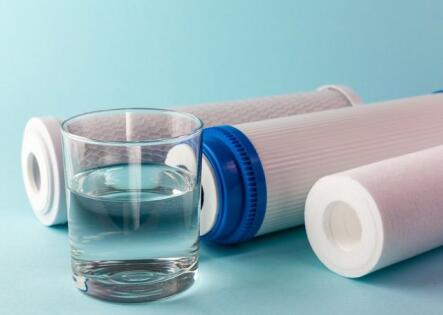
How Does Activated Carbon Work?

The process of removing contaminants is through catalytic reduction or adsorption. Adsorption is a process of negatively charged contaminant ions being attracted to the positively charged activated carbon. Residual disinfectants such as chlorine and chloramines are removed by catalytic reduction, and organic compounds are removed by adsorption. Hydrogen sulfide also can be reduced by catalytic reduction. Acidity and the temperature of the water can be important because greater acidity and lower water temperatures tend to improve the performance of activated charcoal.

Activated carbon water filter:

Removes organics that can affect taste, odor and color

Reduces chlorine, trihalomethanes (THM), pesticides, industrial solvents (halogenated hydrocarbons), polychlorinated biphenyls (PCBs), polycyclic aromatic hydrocarbons (PAHs), radon gases (unknown levels)

Does not remove or reduce microbes, sodium, nitrates, fluoride, hardness

Caution About Bacteria When Using Activated-carbon Filters

When your AC filter becomes loaded with organic contaminants or the filter is not used for a more than five days, it can become a food source for bacteria. While experts don’t know if the bacteria are harmful, some manufacturers have added silver to the activated charcoal to reduce bacterial growth.

Although the Environmental Protection Agency (EPA) registers all carbon filters with added silver as bacteriostatic, it does not endorse these methods for reducing bacterial levels in the filter or the water. The Federal Insecticide, Fungicide and Rodenticide Act’s required registration indicates the filter does not release excessive amounts of silver. Furthermore, a bacteriostatic carbon filter is not adequate to treat water that is microbially unsafe.

How Does Activated Carbon Work?

Activated Carbon Filtration Equipment

AC filters can be placed in four categories: 1) pour-through, 2) faucet-mounted, 3) high-volume and 4) whole-house.

Pour-through AC filters are the simplest. They work like a drip coffee maker. Water is poured in the top and travels by gravity through a filter to the bottom. They are quite slow and handle only small volumes of water.

Faucet-mounted AC filters are small units attached at the end of a standard kitchen faucet. They are convenient to use, but because of their size, they require frequent replacement. Some units have bypass valves, so only water for cooking and drinking is filtered.

High-volume AC filters contain much more AC than either the pour-through or faucet-mounted models. High-volume units generally are installed under the sink on the cold-water line. Some units are installed with a bypass to separate cooking and drinking water from other uses. A high-volume unit may be installed at the point of entry to the house if all water needs to be treated. When choosing an AC filter, remember the one with a clear holder allows you to see the filter and monitor its usefulness.

Whole-house refers to the placement of the filter rather than the filter type. However, only certain types of filters are suitable for use as whole-house filters due to the volume of water being treated and consequently the frequency with which the filtering media has to be changed or regenerated (depending on the filter type). The most common whole-house filters are sediment or AC filters.

As you shop for filters, look at the manufacturers’ product description or catalog categories because these will indicate which filters are suitable or intended specifically for use as whole-house filters.
YUNDA FILER are Applying for NSF473 Certificate by IAPMO for Fluoride Removal

What is fluoride?

Fluorides are compounds that combine the element fluorine with another substance, usually a metal. Examples include sodium fluoride, stannous fluoride, and fluoride monofluorophosphate (MFP fluoride).

Some fluorides occur naturally in soil, air, or water, although the levels of fluoride can vary widely. Just about all water has some fluoride. Fluoride is also found in plant and animal food sources.

Once inside the body, fluorides are absorbed into the blood through the digestive tract. They travel through blood and tend to collect in areas high in calcium, such as the bones and teeth.

Fluoride in drinking water

Water fluoridation began in some parts of the United States in 1945, after scientists noted that people living in areas with higher water fluoride levels had fewer cavities. Starting in 1962, the United States Public Health Service (PHS) recommended that public water supplies contain fluoride to help prevent tooth decay.

Fluoride is now used in the public drinking water supplied to about 3 out of 4 Americans. The decision to add fluoride to drinking water is made at the state or local level. The types of fluoride added to different water systems include fluorosilicic acid, sodium fluorosilicate, and sodium fluoride.

Natural drinking water sources in the US also have some fluoride in them, although the levels are much higher in some places than in others.

Association Between Maternal Fluoride Exposure During Pregnancy and IQ Scores in Offspring in Canada
The study shows from 6 cities in Canada, higher levels of fluoride exposure during pregnancy were associated with lower IQ scores in children measured at age 3 to 4 years. These findings were observed at fluoride levels typically found in white North American women. This indicates the possible need to reduce fluoride intake during pregnancy.

YUNDA FILER Products are Applying for NSF473 Certificate by IAPMO

Can you reduce your fluoride exposure?

Even without fluoridation, the natural levels of fluoride in water in some places can be even higher than 4 mg/L. Community water systems in such areas are required to lower the fluoride level below the acceptable standard. But the levels in private water sources, such as wells, may still be higher.

For people concerned that they or their families may be exposed to too much fluoride, there are some steps you can take to reduce your exposure.

Know the level of fluoride in your drinking water. If your drinking water comes from a public source, you can find out about the levels of fluoride in your drinking water by contacting your local community water system. People who get their drinking water from a private source such as a well can have the fluoride levels tested by a reputable laboratory. You need to install a water purifier in your home because it can effectively remove fluoride from the water.

YUNDA FILER are Applying for NSF473 Certificate by IAPMO for Fluoride Removal

Why Install an Activated Carbon Water Filter Cartridge?

When you buy a water purifier you will find that they all have an activated carbon filter cartridge. For clean water, activated carbon filters are very important, they can effectively remove specific pollutants in the water, and the price advantage determines its irreplaceability.

Why Install an Activated Carbon Water Filter Cartridge?

As you know, the material of the activated carbon water filter is activated carbon. The unique properties of activated carbon determine that it can efficiently adsorb water or airborne substances. Activated carbon is widely distributed and inexpensive. Activated carbon is made into a cylindrical shape and can be used as a water filter. Activated carbon water filter can effectively remove chlorine, odor, pigment and organic matter from water.

In general, activated carbon water filters are used for water pretreatment, and after the PP water filter removes sediment from the water, the activated carbon water filter begins to function. After the activated carbon is generally an ultrafiltration membrane or a RO membrane; they can remove bacteria and viruses from the water. These are all difficult to do with activated carbon filters.

Why Install an Activated Carbon Water Filter Cartridge?

Granular activated carbon water filter and compressed activated carbon water filter are two common products, they have the same function, the only difference is that the compressed activated carbon water filter has a trapping effect. If you plan to install a water purifier, the activated carbon filter cartridge will be an irreplaceable member of your water purifier.

Why Should You Replace the Shower Filter Regularly?

Do you install a shower water filter? You will install a whole house water filter or buy an under-stage water purifier, which is an easy way for your family to drink pure water. Will you install a shower water filter? Unfortunately, chlorine can enter our blood through the skin and ultimately threaten your health.

You don’t think that unfiltered shower water will threaten our health. There will be some extra chlorine in the tap water, and the under-water purifier will remove the chlorine from the water; but if you don’t install the shower water filter, the chlorine will still enter my blood through the skin. To make matters worse, the higher the temperature of the water, the more chlorine will enter our blood. So installing a shower water filter is a must for you.

Why Should You Replace the Shower Filter Regularly?

You need to change the shower water filter cartridge frequently

All water purifiers require regular replacement of the water filter cartridge. Similarly, the shower filter cartridge needs to be replaced. This is a prerequisite for the shower water filter to function. You will need to replace some shower filter cartridges in about 6 months.

The filter cartridge not only removes chlorine from the water, it also softens the water. You should have had this experience. After you take a shower, you will find that the skin and hair are dry, mainly because of hard water. When you install the shower filter, you will find that your skin and hair become more comfortable. Install the shower water filter now and it will make you enjoy the shower more.

Why do You Need to Change the Whole House Water Filter Cartridges Frequently?

You will install a whole house water filter that will allow you to drink healthy water. More importantly, you need to change the water filter cartridge frequently, because this is the premise that you have been drinking safe and healthy water. This article will introduce you to some commonly used whole house water filter cartridges; you can also buy the filter cartridge you need on the website, and you can get a message online.

Why do You Need to Change the Whole House Water Filter Cartridges Frequently?

Why Replace the Whole House Water Filter Cartridge Regularly?

Can a filter cartridge permanently filter contaminants in your water? This is very stupid if you have this idea. No whole house water filter cartridge can be used indefinitely, their most common life will not exceed two years, and even some whole house water filter cartridges need to be replaced in 3 months. Contaminants in the water are trapped by the filter element and eventually stored on its surface; you need to replace it when it reaches the critical point of its ability to store contaminants. Otherwise, the water may be contaminated twice.

Whole House PP Sediment Filter Cartridge

PP sediment filter cartridges are often used as pre-filters, which is a wise choice. There are some particulate contaminants in the water that need to be filtered in advance. Therefore, the whole house PP sediment filter cartridge is a better choice, it can remove particulate pollutants in water more efficiently. Of course, you need to replace it regularly for 3-6 months.

Why do You Need to Change the Whole House Water Filter Cartridges Frequently?

Whole House Activated Carbon Water Filter Cartridge

A more common activated carbon filter after PP sediment filter. The activated carbon filter can efficiently absorb chlorine, odor and pigment in water. The most common substance in tap water is chlorine, and the high-quality whole house activated carbon filter can absorb up to 99% of chlorine in water. Its efficient function and low cost are destined to be an irreplaceable filter. You need to change every 6 months.

No matter which filter cartridge you plan to install in the whole house water filtration system, regular replacement is a filter is inevitable. Fortunately, you can find the whole house water filter model you need to be replaced on the website. Leave a messages are available online.

Home Water Filtration Supplier & Manufacture

This is a difficult thing, you want more people to buy your water filtration products. But you can look for a better home water filtration supplier & manufacture. You need to wholesale a cheaper home water filter, which will let you make more money.

Yunda is a manufacturer and supplier of domestic water filters, offering almost all types of water filters and cartridges. This is good news for you, because Yunda can meet all your needs, you don’t have to be in demand for other suppliers. This will save you some costs. As a manufacturer, Yunda independently develops and manufactures water filtration products, including refrigerator filter cartridges, coffee machine filter cartridges, pitcher water filters, ro system replacement cartridges, and some commonly used water filtration replacement filters. Some commonly used household water purifiers are also available, such as the ro system, the whole house water purification system, and the on-stage water filtration system.

Home Water Filtration Supplier & Manufacture

Because the Yunda water filtration manufacturer produces the product directly, the price is very cheap. You can purchase products directly from the Yunda Water Filter Supplier, except for the necessary shipping costs and no other fees. Based on this price, you can make more money. Fortunately, you don’t have to worry about the quality of the product. The products of Yunda Water Filtration Supplier are certified by the US NSF organization, and the safety of the product and the function of the product are guaranteed.

Why is the PP Sediment Filter Used as the First Stage?

You will find that the PP Sediment filter is often used as the first stage of the water purifier. Do you know why? PP Sediment filter: PP Sediment filter is made of non-toxic and odorless polypropylene, heated, melted, spun, drawn, and finally made into a cylindrical filter; it also known as PP spray filter.

Why is the PP Sediment Filter Used as the First Stage?


Why is the PP Sediment Filter Used as the First Stage?
 It can Effectively Remove Particulate Impurities in Water
The water flows from the outside of the PP sediment filter to the inside, and the water is filtered. The closer to the inner layer of the filter, the smaller the pore size and the higher the precision of filtration. The particulate impurities are blocked when passing through the PP precipitation filter channel, and even particles smaller than the pores can be blocked, thus removing various particulate impurities in the filtered liquid.
Multi-layer Deep Structure, Large Amount of Dirt
The outer layer of the PP sediment filter has a large pore size, while the inner layer has a small pore size, the outer layer is loose, and the inner layer is compact, and constitutes a multi-layer gradient structure with high inner layer precision and small outer layer precision. Each layer of this multi-layer structure can intercept and store impurities in the water, and the amount of dirt is large.
Large Filtering Traffic
The raw material polypropylene of the PP sediment filter cartridge is entangled by self-adhesion to form a three-dimensional labyrinth microporous structure, which has a larger surface area and a higher porosity than the conventional fabric fiber distribution.
The large surface area and a large number of small holes allow the water to quickly pass through the PP precipitation filter element, so that the height of the inner and outer water does not differ too much, so not only the filtration flow rate is large, but also the pressure difference is small.
Free of Chemical Binders, More Hygienic and Safe
The polypropylene is melt-sprayed and drawn, so that the polypropylene fibers are entangled by self-adhesive to form PP sediment filter cartridges of different shapes and sizes.
The many advantages of PP sediment cartridges have led them to be used as the first stage filter for water purifiers. PP sediment filter cartridges are an important part of the water purifier, they can also effectively remove particulate pollutants in the water. You can find the PP sediment filter on the website and buy it.

Why Choose Yunda Filter supplier Water Filtration Products?

You want to wholesale cheaper water filtration products, which will make you make more money. Yunda Filter is a water filter supplier, you can wholesale or customize almost all domestic water filtration products.

There are many good reasons for filtering water, and Yunda Water Filter Supplier can provide numerous products for the purpose. The RO System under-sink water filter is the only filter that reduces the calcium and taste-inhibiting substances in tap water, while adding the precious mineral magnesium. This takes place in the filter cartridge using magnesium technology. The RO System post filter cartridge, the core of the Yunda Water Supplier under-sink water filter. It also removes the small quantity of silver particles released during the filtration process. The filtered water is notable for its taste, and brings out the full aroma of tea and coffee.

Why Choose Yunda Filter supplier Water Filtration Products?

Convenience and safety from Yunda Filter

But Yunda Water Filter products not only prove their worth in the kitchen, but in the bathroom too. Water with a high calcium content leaves deposits on shower walls and fittings, resulting in laborious cleaning and the rapid deterioration of the facilities. But when the domestic water is treated with Yunda Shower Filter, the calcium remains in the water, which is good for our drinking water and our household appliances, because with the water filtration technology, no limescale can form in the pipe system. The bath and shower are not protected, however, and the same problem also occurs in households where no treatment is implemented to provide perfect water quality.

This problem is solved in an instant with the Yunda Water Supplier Softened water filtration. The maximum efficiency resulting from this is combined with an unprecedented feeling of cleanliness – the bath and shower gleam and shine with the minimum of effort and without the use of chemicals. And no deposits or streaks are left behind.

Why Choose Yunda Filter supplier Water Filtration Products?

Yunda Water Filter Supplier will always have the optimum solution for you, not only for your ease of use, but also in terms of hygiene and safety. Drinking, cooling and refrigerator water in building installations should never pose any health risks to humans. However, many factors affect the proliferation of bacteria in drinking and process water systems. People need to install a household water purifier and regularly replace the water filter cartridge to ensure the purity of the water.

Yunda Water Filter Supplier produces almost all household water filtration products. You can find the products you are interested in on the website and leave a message online.

What do You Need to Know About the Water Filter?

Many homes have water filters installed at home, which is a guarantee for them to drink safe and healthy water. It is very important that you are considering which type of water purifier to install. But more importantly, you need to know the water filter in advance and choose the right one.

What do You Need to Know About the Water Filter?

Principle of Water Filter

Many water filters on the market use physical means to intercept pollutants in the water and purify the water. Almost all water purifiers trap contaminants in the water, the difference is in which water filter cartridges are used. The function of each type of water filter cartridge is different. Some remove sediments in water, such as stones and rust; some remove harmful substances such as viruses and bacteria in water.

Does the Water Filter Cause Secondary Pollution?

The contaminants trapped by the water filter cartridge are stored on the surface of the filter cartridge, so you need to replace the water filter element in time. If the life of the filter cartridge is exceeded, it may cause secondary pollution. So you need to replace the water filter element in time.

What Should You do if the Taste is Getting Worse?

After the water is filtered, the taste is worse. What is the reason? Some water filter cartridges filter out ions in the water, so the taste of the water will deteriorate. A post filter cartridge is necessary to make the water taste better.

What do You Need to Know About the Water Filter?

How to Choose a Water Filter?

You need to choose a water filter according to the actual situation. You should first understand the quality of your city and then install the appropriate water purifier according to the water quality. If you want to remove chlorine from the water, you can choose an activated carbon water filter; if you want to remove bacteria from the water, the ro system may be a better choice.

Before installing a water filter, you need to know more about water filtration, which will make it more convenient to install a suitable water purifier.

YUNDA FILER are Applying for NSF473 Certificate by IAPMO for Fluoride Removal

What is fluoride?

Fluorides are compounds that combine the element fluorine with another substance, usually a metal. Examples include sodium fluoride, stannous fluoride, and fluoride monofluorophosphate (MFP fluoride).

Some fluorides occur naturally in soil, air, or water, although the levels of fluoride can vary widely. Just about all water has some fluoride. Fluoride is also found in plant and animal food sources.

Once inside the body, fluorides are absorbed into the blood through the digestive tract. They travel through blood and tend to collect in areas high in calcium, such as the bones and teeth.

Fluoride in drinking water

Water fluoridation began in some parts of the United States in 1945, after scientists noted that people living in areas with higher water fluoride levels had fewer cavities. Starting in 1962, the United States Public Health Service (PHS) recommended that public water supplies contain fluoride to help prevent tooth decay.

Fluoride is now used in the public drinking water supplied to about 3 out of 4 Americans. The decision to add fluoride to drinking water is made at the state or local level. The types of fluoride added to different water systems include fluorosilicic acid, sodium fluorosilicate, and sodium fluoride.

Natural drinking water sources in the US also have some fluoride in them, although the levels are much higher in some places than in others.

Association Between Maternal Fluoride Exposure During Pregnancy and IQ Scores in Offspring in Canada
The study shows from 6 cities in Canada, higher levels of fluoride exposure during pregnancy were associated with lower IQ scores in children measured at age 3 to 4 years. These findings were observed at fluoride levels typically found in white North American women. This indicates the possible need to reduce fluoride intake during pregnancy.

YUNDA FILER Products are Applying for NSF473 Certificate by IAPMO

Can you reduce your fluoride exposure?

Even without fluoridation, the natural levels of fluoride in water in some places can be even higher than 4 mg/L. Community water systems in such areas are required to lower the fluoride level below the acceptable standard. But the levels in private water sources, such as wells, may still be higher.

For people concerned that they or their families may be exposed to too much fluoride, there are some steps you can take to reduce your exposure.

Know the level of fluoride in your drinking water. If your drinking water comes from a public source, you can find out about the levels of fluoride in your drinking water by contacting your local community water system. People who get their drinking water from a private source such as a well can have the fluoride levels tested by a reputable laboratory. You need to install a water purifier in your home because it can effectively remove fluoride from the water.

YUNDA FILER are Applying for NSF473 Certificate by IAPMO for Fluoride Removal