You Should Replace Your Pool Filter Cartridge Regularly

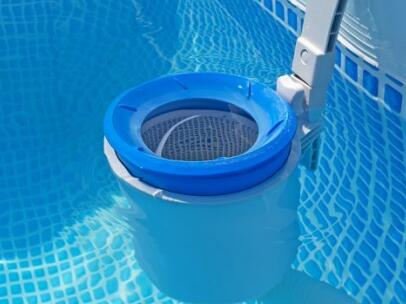
Pool-filter cartridges are used to keep home swimming pools and spas clean. They can be used for pools with a capacity of 30,000 gallons or less volume of water. The filter cartridge is generally made of polyester cloth or corrugated paper that acts as a filter. When the filter is dirty and clogged, the water in the entire pool can become dirty. Check out these guidelines below to know how often you should replace your pool filter cartridge to keep your water safe and clean.

General Filter Life

Pool filter cartridges can run for about 2,000 hours in a filter pump. Usually, filter cartridges have to be replaced once every one to two years. The filter, however, will not last as long if you enter the pool with suntan lotion, deodorants, hair-care products, and other chemicals.
You Should Replace Your Pool Filter Cartridge Regularly

To know when to replace it, you should observe the filter’s condition. If the cloth looks loose, or if the cartridge looks cracked, it’s time to replace it with a new one.

Usage and Size

How often you need to replace the pool-filter cartridge depends on the size of your pool and how often it’s used. It also depends on the quality of water used. When there are a lot of people using the pool often, these filters get clogged and dirty from body oils, dirt, and other waste. Rinsing your filter after every change of water in your pool can help prevent this build-up.

Maintenance

Step 1 – Remove Filter and Rinse

First, remove the filter from the cartridge and rinse it off with a brush and hose, spraying it with regular water. You should repeat this process at least once per week.
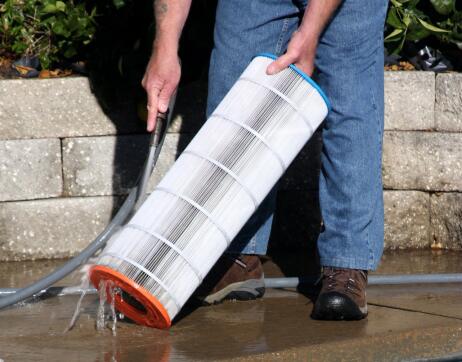
You Should Replace Your Pool Filter Cartridge Regularly

Step 2 – Replace Filter if Needed

Next, inspect the filter. You should change it when the life of the filter cartridge has reached its maximum limit, whenever there is a pressure of 8 psi and above in the filter canister, and when there’s a tear or collapse of the center core of the cartridge.

In addition, if you notice that your water flow is reduced, it means that the cartridge is clogged and should be replaced.

Step 3 – Elongate Your Filter’s Life

To elongate your filter’s life, use water clarifiers, like diatomaceous earth, to minimize the risk of clogging. In addition, you should allow hot tubs to run at least 1 hour every day so that there’s adequate water flow. Lastly, you can add an oil-absorbing sponge to your pool so that the filter is spared from body oils people bring into the pool.
Know the Home Water Filtration product and Install Them

Water filters for your home

Water filters are usually recommended if you have a private water supply on your property with a high amount of sediment or is at risk of chemical contamination.

Many types of water filter are available for purchase or hire.

They range from the simple bench top style to sophisticated systems requiring special plumbing and electrical work.

How do home water filters work?

Water filters work as a physical barrier that can block or trap debris (for example sand) and sometimes bacteria from passing through.

Generally, the speed of the water flow will depend on the size of the gaps in the filter barrier or membrane. A fine filter with the smallest gaps will mean a slower water flow. A clogged filter will also slow the water flow.

Careful consideration should therefore be given to the quantity of water required, and the time it takes to filter, before you buy a water filter.

Usually, home water filters with a faster water flow are more expensive.

Will a water filter improve the taste and odour of water?

Several water filters currently on the market will effectively improve the taste and odour of water.

Filtration can remove tastes and odours whether they are naturally occurring or caused by a disinfection process.

Know the Home Water Filtration product and Install Them

Will a home water filter remove bacteria?

Only a reverse osmosis water filtration system will effectively remove harmful bacteria.

The simplest way to remove harmful bacteria is to disinfect the water by chlorination or by ultraviolet radiation.

As some home water filters remove biocides (substances that can control the growth of harmful organisms, such as chlorine), it is possible that bacteria will re-grow unless the filtered water is stored in a sterile container in a cool, dark place.

Some water filters may also allow bacteria to multiply to great levels on the filter pads if they are not maintained regularly.

In most circumstances domestic household water filters or ultra violet treatment systems will not make water safe in relation to amoeba unless you also disinfect with chlorine. Read more about amoebic meningitis.

Will a home water filter soften hard water?

Some water filters will soften hard water. Hard water contains calcium and magnesium salts which results in:

the need to use more soap

a build up of scale on plumbing fixtures

a metallic taste to water.

Filter types available

Water filters that are currently available to consumers include:

polypropylene and ceramic

activated carbon

reverse osmosis and distiller.

The most sophisticated systems are reverse osmosis and distiller filters.

Polypropylene and ceramic filters

Polypropylene and ceramic filters function by removing particles from the water. Fibres are packed tightly together to form a fine mesh screen that physically traps and removes foreign particles from the water.

However, as these filters become clogged it is necessary to throw away the filter or cartridge and replace it with a new one. Some filters may also soften hard water.

Activated carbon filters

Activated carbon filters are most effective in removing chemicals such as iron, manganese, chlorine and hydrogen sulphide along with objectionable tastes and odours.

Some may also contain ion exchange resins that can soften hard water.

Polypropylene, ceramic or activated carbon filters should not be relied upon to disinfect water.

Reverse osmosis filters and distillers

Reverse osmosis filters and distillers are the most sophisticated systems. They are capable of removing bacteria and most residual chemicals, including minerals from a water source.

However, reverse osmosis and distillers are not effective in removing hydrogen sulphide (a gas with an unpleasant rotten eggs smell) in acidic waters.

Know the Home Water Filtration product and Install Them

How much do water filters cost?

The cost of water filters vary considerably.

Some water filters are simple two-tiered jugs while others connect directly to the kitchen tap and are located either on or under the bench.

Reverse osmosis filters are the most expensive to purchase, install and operate.

Which filter should I use?

For discoloured water with fine particles of grit and other foreign material, a polypropylene or ceramic filter will effectively remove the sediment. It will not remove bacteria.

To remove naturally occurring or disinfection tastes and odours from water an activated carbon filter is more appropriate. It will not remove bacteria.

To remove chemicals and bacteria, a reverse osmosis or distiller system would be required.

In most circumstances domestic household water filters or ultra violet treatment systems will not make water safe in relation to amoeba unless you also disinfect with chlorine.

You can find more home water filtration products on the website.

You Need to Know 5 Stage Reverse Osmosis Filtration System

Reverse osmosis systems for purifying water have been around since 1977. At first, these were large volume industrial systems used by some municipal water purification plants. For a while now, domestic reverse osmosis units have become popular in our homes. They provide clean, healthy, great tasting water.

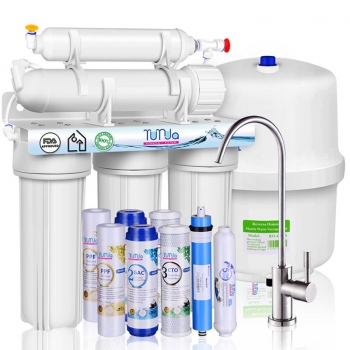
A reverse osmosis system has anything from 1 to 5 stages. Of course, a 5 stage reverse osmosis system is the best. They provide the greatest level of purification and some 5 stage reverse osmosis filter systems add essential minerals back into the water during the fifth stage.

You Need to Know 5 Stage Reverse Osmosis Filtration System


To help you understand these water filters better, this article is going to discuss how a 5 stage reverse osmosis water filtration system works. All reverse osmosis filtration systems work on the same basic principles, it’s just the number of filtration levels that increase. So you were wondering what the difference is between 3, 4 and 5 stage reverse osmosis is, this is your answer. A 5 stage reverse osmosis system, uses 5 different types of filtration, a 4 stage system will use 4 and so on.

All reverse osmosis systems have common components. These would be a water inlet, filters, a pressurized storage tank, a drain (usually with an automatic shutoff valve), flow controller, check valve and finally, an outlet (usually a dedicated faucet at the kitchen sink).

Let’s look at how all these components come together in a 5 stage reverse osmosis filtration system and how they all work.

Reverse Osmosis Stage 1
A cold water line valve is fitted to the water supply in your home and a tube directs the cold water to the reverse osmosis system. The first stage is a pre-filter that removes the solid materials like silt, rust, and dirt from the water. This first stage prevents the other RO filters from becoming clogged with larger debris.

Reverse Osmosis Stage 2 & 3
It’s during the second and third stages that the true reverse osmosis begins. The reverse osmosis membrane and carbon filters make up these stages. These filters remove chlorine from the water. By doing this in 2 stages, the system removes the chlorine more effectively. During these two stages, elements that may affect the color of the water are also removed. By this time, the water is clear and tastes just about pure.

You Need to Know 5 Stage Reverse Osmosis Filtration System

Reverse Osmosis Stage 4
Apart from chlorine, there are many other chemicals that can affect our health and the taste of the water. These include fluoride, lead, and chromium. During the fourth stage of the reverse osmosis process, membranes remove these other elements from the water.

Reverse Osmosis Stage 5
The final stage of a 5 stage reverse osmosis filtration system is called post-filtration. As the water leaves the tank, on its way to the faucet, it passes through a filtration membrane that collects any particles that may have accumulated inside the tank. Some 5 stage RO systems use a process known as remineralization which replaces essential minerals that are removed during the previous stages. These essential minerals are those that the body needs as part of its daily nutrition and this makes the water more beneficial to our health.

What Well Water Filtration System do I Need for Your Home?

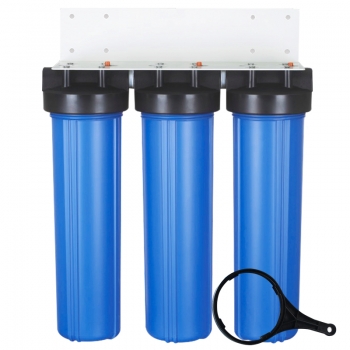
Everyone wants better-tasting drinking water, but there may be worse things lurking in your well’s water that you can’t taste. A Whole House Water Filter makes sense for homeowners with wells that want to improve the smell and taste of their water, but that also want to filter out any contaminants, parasites, or bacteria that could be present in their family’s water supply.

When you want to ensure you are protected from the undesirables that may exist in well water, any old water filter won’t do. Learn more about the potential hazards of well water and how some optional components of a Whole House Water Filter can provide you with the safest, best-tasting water possible.

Why should your well water be filtered?

You may think that because your water comes from a well, it is safe for consumption. Even though the soil over and around the well help filter out disease-causing microorganisms in groundwater, it is still possible for contaminants to find their way into your home’s water supply.

Whole House Water Filter

Well casings or caps are improperly installed

Well casings break

Contaminated surface water enters the well

Their website goes on to mention that water quality problems can be prevented with the installation of a well water filtration system, such as the ones Filter Butler provides.

What is in your well water?

Typically, the age, design, installation, or condition of your well contributes to contaminants seeping into your water supply. The best way to determine if your well water may contain contaminants is to be vigilant about having your water tested annually for newer wells, two to three times per year for existing wells.

A Whole House Water Filter helps remove and resolve the following water issues that may be present in your well water:

Foul smell

Funky taste

Contaminants

Bacteria

Parasites

It is advisable to test your well water when the likelihood of contamination is highest – namely, in early spring (post thaw), after an extended dry spell, during periods of extensive rainfall or after prolonged periods of non-use.

Whole House Water Filter

What does a filter do?

A filter that is outfitted with the appropriate well water filtration components will target and remove the aforementioned impurities from the water that your family consumes or is exposed to. This is one of the reasons why it is important to work with professionals to determine the right components for your system, and your home.

For instance, your well water filtration system may be augmented with a Sub-Micron Post Filter and a UV filter – two optional filtration components that complement each other – to remove common pollutants known to compromise the well water in your region. Specifically, the Sub-Micron Post Filter helps to remove or eliminate organic and sediment particles that a standard Whole House Water Filter may not completely prevent, and the UV filter effectively removes any additional viruses or bacteria that could potential pose a threat to your health. In all, these added components help protect your family from the following:

Pesticides

Viruses

Inorganic compounds

Organic compounds

Sickness and disease

What water filtration should I get for my well?

The most effective way to achieve results and improve your home’s well water is through customizing a Whole House Water Filter system to suit your specific needs. Adding a Sub-Micron Post-Filter and UV filter can help remove common contaminants and undesirables from your family’s water supply, and has been identified as being highly preventative approach for homeowners that use their own well.

Determine the capacity that you want to filter, and whether you are interested in renting or purchasing your Whole House system. Talk to a Whole House Water Filter system expert when in doubt, or if you have questions regarding products that may improve your home’s water.

What Type of Water Filter You Need to Know?

Although U.S. drinking water has been protected under the Safe Drinking Water Act since 1974, many experts warn that water from a tap source does not meet health guidelines. While you cannot always control the source of your water, you can certainly add an extra layer of protection from contaminants by purchasing an efficient filter. Here are the most common water filter types:

Carbon Filter Systems:

Carbon, a porous material, absorbs impurities as water passes through these point-of-entry systems. They generally remove lead, PCBs, chlorine byproducts, certain parasites, radon, pesticides and herbicides, certain gasoline and dry cleaning additives and solvents, some levels of bacteria, and traces of pharmaceuticals.

What Type of Water Filter You Need to Know?

Reverse Osmosis Systems:

Often used in conjunction with carbon filters, these systems push water through a semipermeable membrane to act as an extremely fine filter. One disadvantage is that these systems waste more water during the filter system (4 to 9 gallons for every 1 gallon filtered). They generally remove more finite chemicals that carbon filters might miss, including perchlorate, sulfates, fluoride, industrial chemicals, heavy metals, chlorine byproducts, chlorides (which give water a salty taste), and pharmaceuticals.

Ultraviolet Light:

These units disinfect water by killing microorganisms with ultraviolet radiation. They are often used as a pre-treatment option or a polishing step in the filtration process and are recommended for use in conjunction with carbon filters to help remove other solid contaminants.

What are Water Filtration and Purification?

Purification vs Filtration
When it comes to finding and drinking water, the first thing you need to know is the difference between water filtration and purification. They are not synonyms.

Water filtration is the elimination of debris, and some bacteria, by way of some type of cloth or mesh net — a sieve — through which the water flows.

What are Water Filtration and Purification?

Water purification is a chemical or UV process of rendering bacteria and other harmful agents inoperative. The chemicals (or heat) in these purification methods essentially deactivate the bad stuff, making it safe for consumption.

Sometimes water needs both of those processes; sometimes it only needs one. Knowing the difference, though, can truly save your life. If you’re backpacking in Africa and think you only need a filter, you could end up with a deadly disease in your system. So let’s get a little more into the differences between the two.

Water Filtration
Using a water filter, especially a commercially tested one (versus just the DIY backwoods variety), can indeed eliminate some bacteria. But not all. Filters can take care of protozoa and bacteria, but they can’t get rid of any viruses present in the water — those are simply too small for the mesh to catch.

Generally, for backpacking and survival purposes, water in the U.S. and Canada is rated as safe for filtration-only methods and devices; this is especially true for mountainous areas. When folks get sick while backpacking or camping and blame it on the water, it’s often found to actually be sanitation-related (not washing hands, not disposing of waste properly or far enough from campsite, etc.).

Filtering water also ensures the best flavor. Your H2O will taste natural and will be immediately drinkable, whereas some purification methods either alter the taste and/or take up to a few hours to make the water safe.

The bottom line is that filters work to rid the water of impurities — including dirt as well as microscopic bacteria — but aren’t completely effective in making the water safe to drink. If it’s all you have, you’ll likely be okay, but know that negative consequences are still possible.

What are Water Filtration and Purification?

Water Purification
Water purification makes H2O safe to drink by deactivating all harmful pathogens, including viruses. Purification doesn’t eliminate contaminants though. Dirty water that’s been purified is still dirty water, and probably needs filtering (that should happen first, actually).

Purification happens primarily through boiling, chemical agents, or UV light. It’s especially important when traveling outside first world countries, where viral infections are more common.

How does a Reverse Osmosis System Work?

The feed water flows to the more concentrated side of the RO membrane when pressure is applied. The pressure forces the water through the semipermeable membrane. The atoms of the contaminants and the membrane contain ions that have the same charge. Since the charge of the atoms of the contaminants and the membrane are the same, they repel each other. This is what stops the contaminants from reaching the other side of the membrane.

Stages Of An RO System

Reverse osmosis is only one of the stages of an RO system. RO systems are made up of 3 to 5 stages of filtration. Water is always treated in an RO system with reverse osmosis in conjunction with pre and post filters. Typically, an RO system contains one or more of the following filters.

How does a Reverse Osmosis System Work?

Sediment Filter – This filter reduces particles like dirt, dust, and rust.

Carbon Filter – This filter reduces volatile organic compounds (VOCs), chlorine, and other contaminants that give the water a bad taste or odor.

RO Membrane – This is the heart of the system. It removes up to 98% of total dissolved solids (TDS)

When water enters an RO system, it goes through the prefilters first. The prefilters catch sediment, chlorine, and particles that cause bad taste and odors. The prefilters stop these contaminants from reaching and clogging the RO membrane. After the water flows through the prefilters it finally goes through the RO process.

Next, the water flows into the storage tank, where it is held until it’s needed. RO systems produce water slowly. If you were to turn your RO faucet on to fill a glass of water at the RO membrane production rate, you would wait about 5 minutes before your glass was filled. A few ounces of water, about 2 or 3 ounces, are produced every minute. This is why a storage tank is necessary. The RO system will continue to process water until the storage tank is full and when you turn on your RO faucet, water comes out of the storage tank and goes through another postfilter to polish the water before it goes to the RO faucet.

How does a Reverse Osmosis System Work?

Does a Reverse Osmosis System Waste Water

A small amount of water goes to the drain when carrying rejected impurities. The wastewater is needed to carry the rejected impurities to the drain. If you want to waste the least amount of water as possible then you need to add a permeate pump to your system. Permeate pumps reduce the rejected water by 75%. Most RO systems come with a shut of device that stops the wastewater from going down the drain when the storage tank is full.

Many people with RO systems use the water that goes to the drain for landscaping. The drain water will have a higher TDS reading but it is safe for your lawn and garden.

How to Choose Home Water Filter?

There’s a much better option for ensuring that the water you and your family drink is as safe as it can be: a home water filter.

How Safe Is Public Water?

Under the Safe Water Drinking Act, the US Environmental Protection Agency (EPA) is responsible for setting national drinking water standards. The EPA regulates over 80 contaminants—including arsenic, e-coli, cryptosporidia, chlorine, and lead—that may be found in drinking water from public water systems. While the EPA says that 90 percent of US public water systems meet its standards, you may want to use a water filter to further ensure your water’s safety.

A 2003 study by the nonprofit Natural Resources Defense Council (NRDC) found that due to a combination of pollution and deteriorating equipment and pipes, the public water supplies in 19 of America’s largest cities delivered drinking water that contained contaminant levels exceeding EPA limits (either legal limits or unenforceable suggested limits) and may pose health risks to some residents. So even though it may test fine at its source, public water may still pick up contaminants on the way to your house.

Contaminants that snuck into city water supplies studied by the NRDC include rocket fuel, arsenic, lead, fecal waste, and chemical by-products created during water treatment.

How to Choose Home Water Filter?

Step One: Assess Your Tap Water

There isn’t a one-type-fits-all kind of home water filter: not every filter type will eliminate every contaminant. You’ll save money and ensure that you’re targeting the contaminants of concern in your area by doing a little research up front.

“Most people purchase the wrong home water filter because they skip this very important step, and then they’ve wasted money and resources on a system that isn’t making their water any safer,” says James P. McMahon, owner of Sweetwater, LLC, which provides consulting and products for people wanting to purify their air or water.

To start, check your water utility’s “Consumer Confidence Report,” the report details where your drinking water comes from, what contaminants have been found in it, and how contaminant levels compare to national standards.

While your report can tell you what’s going on with the water in your area, only a test of the water coming out of your tap will tell you what you and your family are drinking for sure.

If your water comes from a private well, so you should have your water tested annually in late spring (when pesticide runoff will be at its worst), and anytime you notice a change in the color or taste of your water.

Step Two: Find the Best Type

Home Water filters come in a dizzying variety, from plastic pitcher filters and built-in refrigerator filters, to faucet and under-the-sink filters, to whole-house models that combine a variety of media types and treat all of the water in your house. What type you want depends on your needs.

The best type of filter to remove chlorine and its byproducts is a combination carbon/KDF adsorption filter (which is a different chemical process than absorption) , which range from shower and faucet filters to sink and whole-house filters. A regular carbon filter won’t remove chloramine, so look for a catalytic carbon filter instead.

If you only have one or two contaminants, a smaller unit, such as a countertop or under-the-sink filter, may meet your needs. To find a filter certified to remove the contaminants you’re most concerned about, visit the NSF’s online database.

Finally, if you find your water has serious safety issues, consider a multi-stage filter that can tackle a variety of contaminants. Many combine a variety of home water filter types.

How to Choose Home Water Filter?

Step Three: Look at the Labels

Some experts recommend looking for a filter certified by NSF International, a nonprofit organization that conducts safety testing for the food and water industries. NSF tests and certifies water filters to ensure that they both meet NSF safety standards and are effective at removing contaminants as claimed by the manufacturer. Underwriters Laboratories and the Water Quality Association also offer similar certification, based on NSF standards.

NSF has different certifications, so when you read the label, first make sure it says the filter will remove the contaminants you’re most concerned about. A filter certified by NSF to remove chlorine isn’t going to be helpful if you need it to remove nitrates. Then, look for the NSF seal, Underwriters Laboratories’ “UL Water Quality” mark, or the Water Quality Association Gold Seal for added assurance that your filter will actually do what the box claims.

Do you Need Water Filter?

Tap water is one of our most important basic necessities. And generally, most countries don’t have to worry about getting sick from the water they’re supplied with. The Drinking Water Guidelines specify that water “should contain no harmful concentrations of chemicals or pathogenic micro-organisms, and ideally it should be aesthetically pleasing in regard to appearance, taste and odour”.

Water authorities use settling, coagulation, filtering and disinfecting to ensure the safety of our drinking water, using sufficient disinfectant to stop the re-growth of microorganisms as the water travels through the pipe system to your home.

The downside of ensuring safe drinking water is the lingering taste and smell of disinfectant. If you fill up a jug with tap water and leave it to sit for a couple of hours, the disinfectant smell and taste will gradually dissipate, but many people opt for a water filtering system.

When you turn on your tap, you should see clear, uncloudy water. If not, or it tastes strange, then there are ways to find out why.

Do you Need Water Filter?

Microbiological risks

Supplying water that’s free from pathogenic micro-organisms (those that can make you sick) is the most important task for water authorities.

Bacteria: Most pathogenic bacteria found in water come from contamination by human or animal faeces. Disinfection (for example, with chlorine) usually kills all bacteria. Another potential threat are bacteria growing in the water mains. That’s why water suppliers try to ensure there’s a residue of chlorine to protect the water on its way from the treatment plant to your home.

Protozoa: This group includes cryptosporidium and giardia. These can cause severe illness, and their cysts can often resist disinfection.

Viruses: Some viruses that can be found in water are potentially harmful. While disinfecting the water usually kills most viruses, some may survive and make you sick. However, it’s not known how big a problem this is in Australia, as the source of a viral infection (whether it’s water, food or contact with another infected person) is difficult to trace.

Chemical risks

Pesticides and herbicides can leach into waterways in rural areas. Some are potentially carcinogenic and live in the environment for a long time. While low concentrations of these chemicals have sometimes been found, our drinking water is usually free of them when tested. However, not all water authorities check for them regularly.

Nitrate/nitrite: The main sources for these chemicals in waterways are sewage and fertiliser run-off. Groundwater supplies in rural areas are most likely to have high nitrate concentrations. While nitrate itself is harmless, it can be converted into nitrite, which mainly poses a problem to babies and young children – it can reduce the amount of oxygen the blood can carry. In areas where nitrate is a problem, the water supplier will usually advise people to use bottled or rainwater for children under three months.

Chlorine and chlorination by-products: Chlorine or chloramine is usually added to kill bugs in the water that passes through the treatment plant and to protect against recontamination while the water’s travelling through the distribution system. However, these chemicals can – depending on a number of parameters – react with naturally occurring organic substances in the water to form potentially harmful by-products (mainly so-called trihalomethanes, or THM). The drinking water guidelines state a maximum concentration for these by-products. They also point out that while their concentration should be minimised, the disinfection of drinking water must not be compromised. The risk posed by by-products is considerably smaller than that posed by the presence of pathogenic micro-organisms.

Do you Need Water Filter?

Fluoride has been added to drinking water since the 1960s and 1970s as it has a proven record of reducing tooth decay. However, fluoride protection is now available from more sources – for example, from many toothpastes or from fluoride treatments applied by your dentist. Critics say fluoridated water is unnecessary, as it may lead to dental fluorosis (mottled teeth) in people who get too much, and we don’t know the potential health risk of drinking fluoridated water over a lifetime.

Aluminium: Chemicals containing aluminium are used in a process called flocculation, which removes suspended particles from the water, making it clearer. While most of the aluminium used can be filtered out of the water, small amounts may pass through. Some water authorities have phased out the use of aluminium chemicals in favour of alternatives.

Problems with your tap water?

If your water looks, smells or tastesaway frostrange, or if your clothing and plumbing (such as sinks and toilets) become stained by it, then you need water filter. They are the best way to keep you m these problems.

Water Filtration Supplier Provide Efficient Water Filters for You

Water filtration is a general term that refers to any system or process that is used to filter out particles and pollutants from water. It doesn’t necessarily need to be a purifier to make the cut. Anything that removes any amount of particles, sediment, bacteria, and the chlorine taste can be called water filtration. If it has a filter of any type, it’s a water filtration system. The mechanism that provides this system is the water filtration supplier.

Water Filtration Supplier Provide Efficient Water Filters for You

Types of Water Filtration

Filtration systems can include activated carbon charcoal filters either designed within a pitcher or included as part of a faucet-mount or tap-installed filter, ultraviolet (UV) light units, reverse osmosis, water distillers (whole system or portable counter), or another form of water treatment process. The term incorporates home filter systems, as well as much larger scale municipal or public water treatment plants. Some appliances are also designed with water filtration features such as refrigerator models which come with onboard filtered water/ice or freestanding water cooler/dispensers. Most of the water filtration suppliers offer the above systems.

There are many different types of water filters available at the water filtration supplier, and your buying decisions will be influenced by the present condition of your water. If it’s not potable, you’ll need a process to remove or destroy harmful bacteria, minerals, and pollutants for starters. Your local water expert is the best professional to help you evaluate your choices.

Once water testing has confirmed what is in your water, you will be given remedy options to make your drinking water safe (potable). Installation requirements and costs will be discussed, based on needs and whether you own your home or not. Today, there are many choices at the water filtration supplier, and these systems are much more affordable than they were a decade ago.

Water Filtration Supplier Provide Efficient Water Filters for You

Home Water Filter Supplier

Water does not need to qualify as not being potable to benefit from some filtration system. One of the biggest consumer concerns is the chlorine taste left by town water treatment plants. It’s a necessary evil that results from measures taken to make your drinking water safe. You can, however, add an economical and simple filter system to reduce that if you wish to. A good alternative is also keeping a filtered water pitcher in the refrigerator.

Note that not all carbon filters, or larger units, have the same efficiency. There are differences in filtration layers or stages, as well as in the quality of materials. That’s where the product details should be reviewed, so you know what the product will do for your water.

YUNDA FILTER Supplier Advanced Faucet Filter Cartridge-Mount Water Filter featured is a good example of a simple measure to improve the quality of water. This is a popular choice for many because of its performance, easy install and affordable price.

Keep It Clean

Whether you choose a small filter or a large unit, The water filtration supplier will advise you that maintenance is key to keeping that system working efficiently. That means routine filter changes by yourself or by your chosen water specialist. If you have hard water or, for some reason, there is more sediment and particles in your water, it may require more frequent filter changes. Being proactive with care is an important part of any filtration process. Water filtration systems differ in size, price, installation, and efficiency, but they all in some way improve our water’s quality.