
A reverse osmosis system sends water with rejected contaminants down the drain as wastewater, unlike other filters that trap contaminants. As water flows through the system, it’s divided into two streams. One stream carries the filtered water to a dedicated faucet, and the other stream carries the removed salts, dissolved pollutants, and minerals to the drain.
The brine or “wastewater” carries rejected contaminants from a reverse osmosis system to the drain. 4 gallons of water exits the drain for every gallon of water produced. But the brine water is used for a purpose, so it’s not exactly wasted. The wastewater in an RO system helps clean the water, just like a dishwasher uses water to clean dishes or a washing machine uses water to clean clothes. However, it’s our job in caring for the environment to minimize the amount of water sent to the drain and increase the efficiency of the RO system.
How to reduce wastewater in an RO system
1. Add a permeate pump. Installing a permeate pump to a reverse osmosis system is the best way to increase its efficiency. Permeate pumps reduce the wastewater from an RO system by 75 to 80%. Not every reverse osmosis system is designed to use one, so make sure the one you choose is plumbed for an additional pump.
2. Choose an RO system with an automatic shut off valve. An ASO valve stops the flow of water to the drain once the storage tank is full.
3. Use the RO reject water for landscaping or artificial lakes. Drain water has higher levels of total dissolved solids (TDS), but it’s safe to use in your lawn or garden.
分类: 未分类
Do You Need a Big Blue Water Filter
How does a big blue water filter housing work?
A Big Blue filter housing holds big filter cartridges. Other manufacturers don’t describe their large diameter filter housings as Big Blue. Any term for large diameter housings refers to housings that operate the same way. Water enters one end and goes down through the housing. Depending on what type of filter cartridge you have, water might flow through the filter and then out, or it might go all the way to the bottom and flow up through the media in the drop-in cartridge. You can put a variety of filter cartridges inside a housing depending on what you’re trying to filter out.
Big Blue 10″ housing
What are Big Blue filter housings used for?
These filter housings are used for point-of-entry (POE) filtration, typically residential. They can be used commercially with more flow rate than a standard-size filter housing. A lot of water can flow through a large-diameter filter housing, so it’s used for a variety of applications. You can put a sediment filter, a carbon filter, or a specialty filter with ion-exchange resin or arsenic-reducing media in a Big Blue filter housing.
What do Big Blue filter housings remove?
The housing itself doesn’t remove anything. It just directs water flow around whatever filter cartridge you put inside. The cartridge does the filtering, or separating the water from the contaminants. The filter housing itself doesn’t do anything until you put something inside. And what type of cartridge you put inside determines what will be removed.
What’s the difference between Big Blue and other filter housings?
Size. Big Blue filter housings work best with point-of-entry flow rates for a whole house. Smaller filters and filter housings are used at the point-of-use (POU). The small cartridges are designed to install under the sink to filter water to a dedicated faucet or with a combination of filters in a reverse osmosis system. Filter housings are designed differently to accommodate flow rate. If you’re looking for a point-of-entry (POE) filter, you’ll want something that can withstand high flow rate. And that’s where the Big Blue housings come into play.
How do you install a Big Blue filter housing?
The Big Blue housing cap is threaded to match plumbing size. These caps are available in three-quarter, one-inch, inch and a quarter, an inch and a half thread sizes. When you’re installing the filter and housing and you have an inch and a half plumbing, make sure the cap measure an inch and a half because you never want to reduce the size from your plumbing size.
If you have a three-quarter-inch cap and an inch and a half housing, you can reduce the fitting down to three quarter with a bushing. If you’re using your Big Blue housing commercially, just connect the water into it. The cap has an in and an out. The end is the feed side. The out is the filtered side. Make sure the in and out are lined up properly since the filter housing doesn’t come on a mounted bracket. Then install your mounting bracket on to hand the filter housing on the wall.
How often should you change a Big Blue filter housing?
Every 10 years.
Big Blue filter housings are dependable and last a long time. The manufacturer suggests that you replace it every 10 years. If the housing’s been in place for 10 years, you probably should replace it. Every time you turn a faucet off while water is flowing through this filter housing, water hammering occurs. This means the inertia of the water flow stops with a force of energy. Many times water hammering causes the housing to move or flex. Eventually, the plastic could get tired of flexing and start to crack. Housings with clear sumps (body) don’t flex like the blue ones or the white ones or the black ones. Clear filter housings use a different plastic blend that doesn’t flex as well, so it cracks and fails much sooner than the polypropylene colored ones. We recommend you change a clear filter housing at least every five years so that you don’t end up with a catastrophic failure where the housing cracks and water floods.
Which Big Blue filter housing do I need?
The Big Blue filter housing has a specific application in conjunction with the cartridge that we’re going to use with it. The filter system that’s right for you could include a combination of filter housings, like one with a sediment filter and one with a carbon filter for removing chlorine or taste and odors. The filter that’s right for you really depends on your water quality.
What Reverse Osmosis System Removes?
Reverse osmosis system eliminates the majority of the dissolved minerals in the water. Many people prefer this because they want their drinking water as pure as possible, and entirely free from minerals, salts, and total dissolved solids (TDS). If you are looking for water with the highest degree of purity, RO has the advantage. If you do want to preserve minerals in your RO water, you will have to add a post-filter remineralizer.
What Ultrafiltration Water Filter Removes?
Ultrafiltration water filter is not going to eliminate dissolved solids or salts. Ultrafiltration only filters out solid particulate matter, but it does so on a microscopic level. Because it has such a fine micron reduction capacity, ultrafiltration will filter out the vast majority of contaminants like sediment, chlorine, and cysts. For people who want to retain minerals like calcium and magnesium in their water, ultrafiltration has the advantage.
Reverse Osmosis Ultrafiltration
Arsenic ✔ X
Bacteria ✔ ✔
Calcium ✔ X
Copper ✔ ✔
Cysts ✔ ✔
Fluoride ✔ X
Lead ✔ ✔
Magnesium ✔ X
Nitrates ✔ X
Pharmaceuticals ✔ ✔
Protozoa ✔ ✔
Salts ✔ X
Sulfates ✔ X
TDS ✔ X
Viruses ✔ ✔
Why do People Measure Their Water’s TDS?
TDS is a popular water quality measurement because it’s simple, accessible, and does provide the reader with a general understanding of their water’s make-up. If the TDS meter returns a 2,000ppm reading, your water is brimming with dissolved solids, many of which are likely to be undesirable contaminants. If the TDS meter shows a reading of 100, you know your tap water is generally low in organic and inorganic compounds and lacking high mineral content.
However, a TDS reading is also a common water salesman trick. If a homeowner is shown a 300ppm TDS reading and told their water is full of dangerous and unknown dissolved substances, this can be used to leverage the sale of an unnecessary and expensive water filtration system. The truth is, a TDS meter alone cannot provide the salesman or the homeowner a complete picture of the water’s quality. A more in-depth water test kit can provide a much more complete picture of what is present in your water. Some specialized tests can be performed at home, and give you estimated ranges of specific contaminants like copper or arsenic. A lab test kit will give you a complete assessment of the contaminant levels present in your water.
How Can a Whole House Water System Benefit Your Life?
Improved Water Quality, Taste & Odor – The whole house water system is guaranteed to improve the water quality throughout the entire home by providing contaminant and odor free water. For example, if you notice sediment in your water and treat your home with a whole house sediment filter you will notice clean, clear water throughout every faucet. The whole house sediment filter can prevent dirt, sand and silt from clogging in your pipes.
Improved Life of Appliances – Whole house water filters are great in protecting your home from damages caused by various water contaminants. For example, if you are experiencing orange iron staining throughout the home, a whole house iron filter can remove these stains and protect your appliances by removing and preventing heavy scale buildup. Benefit from reduced red staining, rust particles and rotten egg odor. Improved water clarity and purity without any bad odors.
Improved Health – Chlorine is a useful chemical used to treat tap water. Unfortunately, it is also a toxic chemical that is harmful for our skin and lungs. When we shower, the heat opens up our pores and absorbs chlorine from both the water and steam. A whole house carbon filter removes chlorine and provides chlorine-free showers, baths and face washes to all faucets in the home.
Softer Skin & Hair – A whole house water softener is extremely beneficial in reducing scale buildup throughout the entire home. This results in easier cleaning, softer hair, skin and brighter, longer lasting clothes. More importantly, it protects pipes and appliances from scale build up to protect any clogging from occurring. Water appliances are able to maximize their efficiency because of the reduced scale buildup from hard water.
Whole house filters remove chlorine and other chemical taste/odor, iron and scale build-up, plus dirt/sediment, making water cleaner and clearer for your whole house. If you have no special contamination issues then a whole house carbon filtration system is recommended for general multi-purpose whole house purification. If you have special water problems then you would need a whole house system dedicated to treat that contaminant. A whole house softener is recommended if you require soft water for a scale free environment and spotless glassware. Whole house filters are a big investment for your home and work effectively to protect your fixtures and home appliances. Enjoy better health and peace of mind knowing harmful contaminants have been removed from every faucet outlet in your entire home.
Why doesn’t Activated Carbon Remove Chloramines?
Chlorine, on contact with the carbon, chemically alters into the harmless compound called chloride. Carbon filters have expansive surface areas with these exchange sites and are remarkable at removing standard chlorine from water supplies. Chloramines, however, have unique stability as a compound. Upon contact with activated carbon, they are not catalyzed with the same efficiency and speed. In order for activated carbon to remove chloramines, very extensive contact time is required to successfully break the ammonia and chlorine apart. This makes them a poor choice for chloramine reduction, as you could not run a shower or fill a bath with such reduced flow rates. Since skin sensitivity is one of the primary reasons people eliminate chloramines, a filtration system capable of sustaining at least a moderate flow rate is crucial for success.
Why You Need insatall a Shower Water Filter?
The bathroom is another important consideration when planning for your personal water safety. Showers, in particular, can cause problems if water is contaminated or heavily treated with chemicals. For example, cities commonly use chlorine to treat the water supply for bacteria and other contaminants, but this excess chlorine can be absorbed into the skin (sometimes in large quantities) when we’re showering, since most of us prefer to shower in warm water. The warmer the water, the more it opens pores, which effectively ushers chlorine (and any other water-borne contaminants that may be present in the water) right into the largest organ in our bodies —our skin.
Hot water can also cause any toxins, bacteria, or fungus in water to become airborne, turning a water-borne concern into a respiratory issue for some, especially those with already-compromised respiratory conditions like asthma.
How a Shower Water Filter Can Help?
In addition to reducing chemical exposure when you shower, shower head filters can also improve your hair’s shine and feel, as well as support healthier, softer skin by minimizing contact with chemicals and toxins. If you choose a water filter that softens water as well, you’ll also notice that you need less soap, shampoo, and conditioner to get the job done as soft water helps very little product lather up quickly — saving you money with every single shower.
Shower head filters can be useful even — and especially — if you live in a dorm, rental home, or apartment, or somewhere that already features water filtration. Not all water filters are created equal, so unless you’ve done the research to know exactly what kind of water filter your water is passing through, it may not make much difference when it comes to your general health, hair or skin care routine. Softeners and filtration systems need to be serviced regularly to be effective, so if your landlord or property manager isn’t on top of the recommended maintenance, a shower head filter can be a great choice to ensure your shower is not only safe, but easier on your hair and skin. An extra bonus? Your shower will also be easier to clean, since shower head filters make it less likely water will leave unsightly or hard-to-remove hard water spots and residue on the shower and fixtures.
A Good Shower Filter for You
Water filtration is a hot topic in recent years, and more people are choosing to drink clean water through high quality filtration systems or spring water. While this is a great first step, it’s also important to think about the water we use to clean our skin. What is often not considered is the impact of shower water from a health and beauty perspective. Could a shower filter be the missing component to your health and beauty routine?
Why Do We Need Shower Filter?
Many of us have experienced changes in the way our hair and skin feel after showering in different cities and locations. Indeed, different countries have different kinds of water and these water sources contain various minerals and chemicals—we’ve all heard the terms hard and soft water thrown around. While this is a far bigger topic that this article allows for, one of the things in water that can be particularly damaging to hair and skin is chlorine. Chlorine is added to pools to kill bacteria, viruses, and other things which may be harmful to the human body. Chlorine (or chloramines) is added to the water supply in many regions for the same reason.
How Does Chlorine Impact Skin?
Sensitive people will notice that itchy feeling when coming out of a pool and after a hot steamy shower where you have been bathing in chlorinated water. Further, you may be familiar with recent research on the role that good bacteria play in supporting optimal human health. These bacteria live in the gut (often referred to as the microbiome), they live on the skin, in your nose, and various other places on or in the body. These bacteria play a major role in maintaining homeostasis at all layers. This means that they play a role in supporting optimal digestive health, hormonal balance, and immune system activation—to name a few. So what happens when we are repeatedly exposed to chlorine? We can disrupt our bacterial environment and this can manifest as a variety of external and internal conditions. If you have a problem on the outside, i.e. the skin, there is likely a problem at a deeper layer as well.
What’s the Best Shower Filter?
So, how can you avoid this issue? How can you take a shower with water that will not hamper your efforts to maintain healthy skin and hair that’s not dry or brittle? Obviously there are various factors, but one easy change would be to use a shower de-chlorinator. Most people don’t even know they exist and have never even considered that this should be part of their health and beauty strategy.
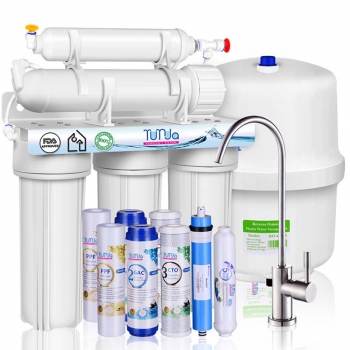
Do You Konw the RO System?
Why not use a ro system? It is the best way for you to drink safe and healthy water. Before installing, you must first understand the principle of the ro system.
Osmosis is the passage or diffusion of water or other solvents through a semipermeable membrane that blocks the passage of dissolved solutes
What, you don’t get it? No fear. Most of us don’t, which is why there are countless explanations and analogies to clarify osmosis. We’ll explore a few of those, but first let’s break osmosis down to its parts to get a grasp on it.
First, we’ll make our solution. We start with a boring old cup of water. To spice things up, we’ll call water the “solvent” — which is convenient, because that’s what it is. To make our solvent a little tastier, we’ll dissolve in some delicious sugar. The sugar is the solute. Just to keep track, we now have water (solvent) that we’ve dissolved sugar (solute) in, to make sugar water (our solution).
Now that we have our solution of sugar water, we’ll grab a U-tube. This is not an internet video of kittens and monkeys hugging; a U-tube is a beaker, shaped in a u-shape. Right in the middle of the tube, imagine a bit of Gore-tex that cuts the U in half. Gore-tex is our “semipermeable membrane.” Gore-tex is a thin plastic, dotted with a billion tiny little holes that allow water vapor to pass through, but liquid to stay out.
In one arm of the U-tube, we pour our sugar water mixture. On another we pour our plain old water. That’s when the magic of osmosis begins, if you find the movement of water magical. The level of liquid in the sugar water arm will slowly rise, as the solvent (water) moves through the Gore-tex, to make both sides of the arm more equal in a sugar-to-water ratio.
But why does that happen? Simply put, because water wants to find equilibrium. And because the one side of the arm is crowded with sugar, pure water from the other side decides to move on over to make the concentration more equal or until the osmotic pressure (the pressure that happens as the molecules move) is reached.
So there you are; osmosis is when a solvent of low concentrated solute solution moves through a membrane to get to the higher concentrated solution, thus weakening it. You did it!
 sun yunda