5 Ways to Remove Viruses in Water

YUNDA water filter supplier share 5 ways to remove viruses in water. Viruses are removed from water through chlorine, ozone water treatment, UV purification, distillation, ultrafiltration, and boiling water.

1. Chlorine

Chlorine eliminates viruses and other pathogens in water through a chemical reaction. When chlorine is added to water, a weak acid called hypochlorous acid is formed, which penetrates the cell walls of viruses and bacteria, destroying them from the inside out. Chlorine is a popular choice for water treatment centers around the world because it can keep the water clean continuously. However, it may leave a residual chemical smell in your tap water. If this is the problem you are experiencing, it is recommended to use an activated carbon filter to greatly improve the taste and smell of the water.

2. Ozone water treatment

Ozone water treatment removes viruses and other troublesome pollutants from water through oxidation. Ozone (O3) is an oxygen-containing compound and one of the most powerful oxidants in nature. In ozone water treatment, ozone is first produced in the ozone generator. It is then injected into water, where it oxidizes the organic matter in the membranes of viruses, bacteria and parasites. This will weaken, rupture and kill their cells. Ozone water treatment can not only eliminate viruses and other dangerous pathogens, but also very fast, purifying water in a few seconds.

3. UV purification

The UV purification system uses UV rays to destroy the DNA of viruses and other organisms, making them unable to reproduce and spread diseases in the water supply. However, when the water is pretreated by different filters (such as sediment filters), the UV purification system is most effective because dirt and debris can protect microscopic viruses, bacteria, etc. from UV rays. When the water is pre-filtered, the UV purification system can neutralize 99.9% of the organisms.

4. Water distiller

The water distiller eliminates the virus by distillation. Distillation is a process that simulates how water is purified in nature: by evaporation in the atmosphere. The water distiller converts water into steam, eliminating viruses and other pollutants because they cannot evaporate like water. Once the water returns to a liquid state, there will be no contaminants.

5. Ultrafiltration

The ultrafiltration system uses standard household water pressure to force water through a hollow fiber membrane, which traps viruses, bacteria, chlorine, algae, and metals. Only clean water and minerals can pass through. The virus is too small for most filters to stop, but the ultrafiltration membrane is about 0.025 microns, while the virus is about 0.1 microns. From their tiny size, human hair is 70 microns wide on average! However, ultrafiltration should not be relied on to treat water from natural sources, such as lakes or rainwater. The ultrafiltration system works best when used in conjunction with other preventive measures (such as UV systems).
Under-Sink Water Filters: Are They a Good for You?

If you’re looking for a reliable water treatment system that filters all the water coming through your faucet, then an under-sink water filter may be a good investment. As their name suggests, under-sink water filters (a.k.a., under-counter filters) can fit under your kitchen sink – entirely out of sight. Not only are they unobtrusive, but they are also budget-friendly and efficient. They can even solve the constant refilling issue associated with pitcher filters. Thank goodness!

Further, under-counter water filters require low maintenance. Once installed, you won’t have to change the filters for months. That means you can banish all those pitcher filters from your life forever, and enjoy the healthy perks of crystal-clear, great-tasting filtered water without the frequent refilling problems.

Under-Sink Water Filters: Are They a Good for You?

But considering all those excellent benefits, you might start to wonder if under-sink water filters are a good investment compared to some of the other types of water filtering solutions on the market, such as whole-house filtering systems, reverse osmosis water filters, and others.

To satisfy your curiosity, we’ll be discussing the good, the bad, and the ugly about under-counter water filters. Hopefully, you’ll learn everything you need to make an informed buying decision when the time comes. Let’s go!

What is an under-sink water filter?
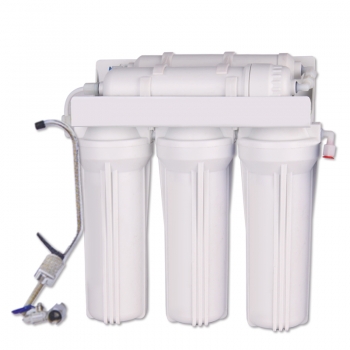
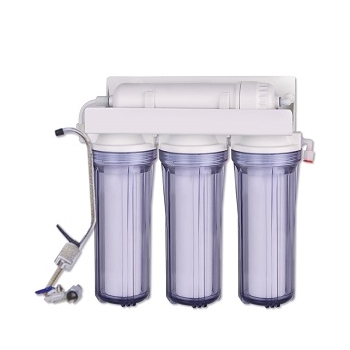
An under-sink water filter is a Point-of-Use (POU) device that works to remove many different kinds of contaminants from drinking water. POU means that the system is installed where you need access to clean water, such as at your kitchen or bathroom faucet, or anywhere you have an appliance that requires clean, filtered water. Also, under-sink water filters are in-line filters that connect directly to your waterline. The water passes through the filter before coming through your tap or other outlets. However, some under-sink filters dispense water through their own specially-installed faucet.

How do under-sink water filters work?
The water delivery process of a conventional under-sink filter is pretty simple and straightforward. The filter gets its water via a flexible plastic tube that’s connected directly to your cold-water line under the sink. Essentially, the tube diverts some of the water to the filter.

The water then leaves the filter through a separate flexible plastic tube and is delivered to you through the filter’s own dedicated faucet, mounted on top of the sink. That means there’s no mixing with unfiltered water.

Because of the constant pressure on the system, the water flows from the filter and out the tap when you turn on the dedicated faucet. Only drinking water delivered via the special faucet is filtered. The sink’s regular cold and hot water functions remain independent.

In contrast, simple under-sink filters have a slightly different water delivery system. In this arrangement, all of the water is diverted through the filter, and the filtered water is dispensed only through the regular cold-water sink faucet.

Under-Sink Water Filters: Are They a Good for You?

The Pros
They’re convenient and efficient: Under-sink water filters provide instant, permanent access to filtered water from a single water source. So, you won’t have to purchase a more expensive solution or refill a pitcher anymore. Besides that, under-sink filters are highly recommended these days because they don’t produce any wastewater.
They deliver targeted filtration: If you don’t want to waste money filtering water for your bathroom, laundry, and toilet with a whole-house filter, under-sink filters allow you to treat water at specific points in your home. After all, most families are mostly concerned with making sure that their drinking water is safe.
They save counter space: If you need the valuable storage space on top of your sink or counter, installing an under-sink filter will be a good choice, especially if you live in a small apartment and need all the countertop space possible.
Better capacity and speed: The best under-sink water filters on the market clean around 1,000 gallons of water. This means that some under-sink filters can last for a year before they need to be replaced. Moreover, because under-sink filter use water pressure to force water through the filter, their filters can be denser, so they can remove a broader range of potential contaminants.
No need to replace cartridges very often: When it comes to maintenance, under-sink water filters are a step-up from pitcher filters. Under-sink filters offer at least six months of filter-replacement-free operation, while filter replacement is required every two months or so for pitcher filters.

Why are Water Filters Worth Buying Wholesale?

As a china water filter manufacturer, we produce almost all kinds of water filtration products. As a water filter distributor, you should improve the safety and health of water purification equipment for users. Wholesale water filters from our factory is a wise decision, which will bring you greater benefits.

Can tap water be drunk directly?

Most people take it for granted that tap water is clean and can be consumed directly. It is true that in some countries tap water can be directly drunk, but the unbearable taste is prohibitive. In order to ensure that all the bacteria in the water are killed, the water plant has to put too much chlorine, and this chlorine will cause the water to have a strange smell. At this time, the best way is to buy wholesale water filters and let them help you remove these unpleasant smells. The water purifier can not only remove the excess chlorine in the water, but also remove some impurities, which come from the pipeline. You should know that water is transported to our homes through pipes, and the rust and even microorganisms produced in the tap water pipes enter our drinking water through the pipes. This is really bad news. So buying a wholesale water filter is a worthwhile thing, it will remove these bad impurities.

wholesale water filters

Would you choose bottled water?

More people will have this idea and buy bottled water. Bottled water is indeed a better choice, if none of the following conditions occur. You need to pay expensive fees for bottled water, and these costs are far greater than the cost of installing a water purifier. Maybe you paid the expensive fee, but the bacteria that may grow in bottled water will make you behave like this. So buying wholesale water filters is a very important thing.

You should know that buying wholesale water filters is a more sensible choice. You can easily drink healthy and safe water without worrying about water health problems.

The Benefits of RO System for Your Family

RO System plays a very important role in soaking ingredients, cooking dishes, boiling soup, making tea, and disease prevention. It can be roughly divided into the following benefits.

1. Turns tap water into great tasting, freshly filtered RO system water. Fresh, convenient and sweet taste. Compared with bottled water, RO System makes drinking water easier and avoids secondary pollution.

Eliminates Need For Bottled Water
Many people purchase bottled water as a quick and convenient way to get fied water. However, the cons of drinking bottled water far outweigh the pros. Frequently purchasing single-use water bottles has negative implications on the environment. ltered water. However, the cons of drinking bottled water far outweigh the pros. Frequently purchasing single-use water bottles has negative implications on the environment. 

Receive an endless supply of filtered water whenever you need it.
Decrease your utilization of single-use plastic bottles, which means less plastic circulating in the environment.
Reduce your carbon footprint.
A reverse osmosis system offers an environmentally-friendly, more convenient solution for your water needs.

RO System

2. RO System build up soften the water. Prolongs the life of your appliances by preventing limescale build-up. Make tea/coffee more mellow.

3. It can remove heavy metals in the water, allowing you to drink healthy water easily and conveniently.
A reverse osmosis system can help remove many of the contaminants commonly found in tap water, including:
Bacteria
Viruses
Lead
Nitrates
Mercury
Particulates
Improved Taste And Unlimited Supply

4. Saves Money
With an RO system in your home, you’ll have access to cleaner, better-tasting water around the clock. This means fewer trips to the store and less money spent on single-use water bottles and filters for refillable pitchers. By investing in an RO system, you’re not only saving yourself money, you’re also saving yourself time. Ditch the trips to the store and simply turn on your tap to drink, clean or cook with water you can trust.

Whether you want to help the environment, save on time or money, or make better choices for your family, reverse osmosis water can help you accomplish your goals. Water is an essential part of everyday life. With an RO system, you can ensure your household is getting the high-quality water it deserves.

What do Whole House Filtration Systems Remove from Water?

Whole house filtration systems remove a variety of contaminants from water and treat different water quality issues. Your home’s water quality will determine which contaminants need to be removed, and in turn, which filter is the best choice for your home.

Water softeners remove:
Dissolved minerals that cause hard water – calcium and magnesium
Dissolved iron and manganese
Scale
Ultraviolet purification disinfects:
Bacteria
Viruses
Parasites
Fungi
Algae
Sediment filters remove:
Dirt, sand, and clay
Rust flecks from aging pipes
Turbidity
Carbon filters remove:
Chlorine
Chloramines* (If using catalytic carbon)
Pesticides and herbicides
Trihalomethanes
Bad tastes and odors
Acid neutralizers reduce:
Acidity imbalance (low pH)
Acidic corrosion

What are the Advantages and Disadvantages of Whole House Water Filtration System

Advantages of whole house water filtration systems:
Remove a multitude of contaminants from water, customized to your specific water issues
Improve the smell and taste of water
Extend the lives of appliances
Prevent damage to pipes
Give you a higher level of peace of mind: Every drop of water that flows through your home is filtered. You can drink, cook, clean, and bathe with filtered water. Also, the water entering your home is disinfected from living organisms. If you have well water, this is a must. If you have city water, this is an insurance policy to protect your family if the city is unable to.
Eliminate the need for plastic water bottles: Less waste is created and avoiding single-use plastic is good for the environment.
Disadvantages of whole house water filtration systems:
Initial cost: Whole house water filters cost between a few hundred and a few thousand dollars.
Professional installation: Whole house water filters usually need to be installed by a licensed plumber, which adds additional cost.
May decrease water pressure: The water supply runs through the filter at a certain speed. If you are taking a shower, doing laundry, and running your dishwasher at the same time, you may notice a decrease in water pressure. However, if you already struggle with reduced water pressure, consider supplementing the filtration system with a water booster pump.

Do You Need a Whole House Water Filter?

You may need a whole house water filter for a variety of reasons. If your home’s water supply contains a troublesome contaminant or generally poor quality, there is a whole house filtration system that can be the solution.  If you are on well water, you may need to remove sediment and to disinfect your water. If you are on city water, you may want to rid your water of the smell and taste of chlorine. If you have hard water, you will reap countless benefits by installing a water softener. A whole house filtration system can be designed to remove anything that is troublesome from your water.

If you are only concerned about filtering the water that you drink and cook with, a whole house filtration system may not be the best choice for you. An under sink or countertop filter would make more sense and be more economical. However, if you want the peace of mind that the water flowing from all your faucets and through your appliances is safe and filtered, then yes, you need a whole house water filter.

What are Nitrates in Water?

Nitrates are inorganic compounds made up of nitrogen and oxygen that occur both naturally and synthetically in the environment. Nitrates are found in the earth’s atmosphere, in the soil, and in water. They are easily biodegradable and highly soluble in water. Nitrates are created by plant decomposition, animal waste, and as an agricultural byproduct. Rainwater, floods, and soil erosion can all lead to nitrates being introduced to groundwater supplies. 

Nitrogen is one of the most essential nutrients for prosperous plant and crop growth. Nitrogen is one of the building blocks of the chlorophyll molecule, which allows plants to create food for themselves through the process of photosynthesis. Fertilizers for lawns, gardens, flowers, and crops all use nitrates to provide the plants with this natural energy to help the plants flourish and remain healthy. When these fertilizers are carried by floods or rainfall into streams and lakes, nitrate levels in the groundwater will escalate.

Nitrogen is abundant in our environment and critical to the health and growth of all living creatures. However, excessive consumption of nitrogen compounds can lead to health complications and illness.  

Wholesale Water Filter

Reverse Osmosis System vs. a Water Softener

Unlike a reverse osmosis system, a water softener does not filter harmful contaminants from water. It removes calcium and magnesium to soften hard water and make washing clothes and showering easier.

Water is softened during reverse osmosis. However, using a reverse osmosis system to treat hard water (above 7 grains) shortens the life of the RO membrane. This will lead to more frequent membrane replacements. If you have hard water, use a water softener to treat it instead.

Reverse osmosis systems and water softeners benefit each other. A water softener installed before the RO system removes iron from the water that can stain your shower, clothes, and toilet orange and clog the RO membrane. An RO system removes sodium added by the water softener.

Why do You need an RO Storage Tank?

An ROSystem storage tank holds reverse osmosis water so you have plenty to use when you need it. A reverse osmosis system makes water slowly. It takes one minute to produce two to three ounces of RO water. If you were to turn on your faucet for a glass of water at the actual membrane production rate, then you would have to wait at least 5 minutes for it to fill. With a storage tank, your glass fills instantly.