Be careful with your household refrigerator without fridge air filter !

In the past, we all thought that eating the rest of the food, or storing the food in the refrigerator is the safest and most hygienic practice, but we never expected it. The food will be attacked by mold in the refrigerator! At this time, you need the refrigerator air filter to help you !
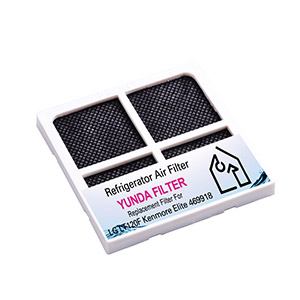
fridge air filter

When food is stored, it is easy to cause bacterial cross infection. Fruits and vegetables contain enzymes . In the air at a suitable temperature and humidity, numerous chemical changes occur in nutrients, which can easily lead to spoilage of food. Be careful with your household refrigerator if there is not the fridge air filter !

Meat, eggs, and fish are highly prone to the growth of microorganisms such as bacteria because of their high nutrient content, high water content, and good pH. When the nutrients in the food are destroyed by bacteria, the degradation products such as ammonia, ketoacids, sulfur and urine are the causes of their pungent odor.

Yunda multi-layered fridge air filter design has a superior absorption effect and can filter a large range of impurities of different practice sizes.The filters are over 15-30 times more powerful than baking sode, because it has high efficiency multi-layer structure. Main filter media is activated carbon fiber, and the other filter media is activated carbon sponge and activated carbon cloth.

The large air filter of the refrigerator can kill the bacteria inside the refrigerator, and inhibit the odor of the refrigerator, so that the ingredients can be preserved for a long time. It is essential for home use.
What is RO Reverse Osmosis Membrane?

The reverse osmosis separation and filtration technology originated from research in the aerospace field, mainly to solve the problem of water used by astronauts. Therefore, the water that has undergone reverse osmosis treatment in the past is also called space water, and the RO membrane is called a high-tech “artificial kidney”.

After that, this technology was gradually converted to civilian use. At present, the top RO membrane is used for polymer filtration in the fields of medicine, military, food, scientific research, and seawater desalination at home and abroad.

As RO membrane technology matures, RO reverse osmosis water purifiers have entered thousands of households and become the safest clean drinking water solution for households. The filtered water that can be directly drunk has changed the traditional way of drinking water in the past, which not only protects the drinking water health of residents, but also greatly improves people’s quality of life.

Classification of RO film

Some water purifiers are divided into 50G, 500G, and 600G. What does it mean? Actually, this is mainly determined by the RO membrane filter element. The larger the number, the larger the volume of the RO membrane equipped with the machine. The higher the average water production volume, the higher the water output. Will be faster.

Maintenance of RO membrane

Generally speaking, the RO membrane filter element will be in the fourth or fifth layer of the water purifier, and the service life is longer than other filter elements.

A water purifier is basically composed of PP cotton, activated carbon, RO membrane and other filter elements. The first few stages of filter elements filter large particles of impurities, which largely protects the RO membrane filter element.

However, users usually have to develop the habit of replacing the filter element in time. Because the water purifier has been used for a long time, it is likely that impurities will enter the RO membrane and block the pores of the RO membrane, causing its life to shorten or even no water.

Therefore, timely replacement of filter elements at all levels of the water purifier can not only ensure healthy water quality, but also extend the service life of the RO membrane and save the cost of replacing the core as a whole.

Three Types of RV Water Filters

The water that flows from your RV’s water tank is rarely pretty stuff. You may end up with city water laced with chlorine if you source your water from a campground. Even outside of that, unfiltered water usually contains sediment and/or dirt, neither of which you want to drink or bathe with.

An RV water filter will purify your water before it ever reaches your lips. Depending on how much purification you need, you can select from a variety of RV water filters. Let’s talk about the different types now.

Hose RV Filter

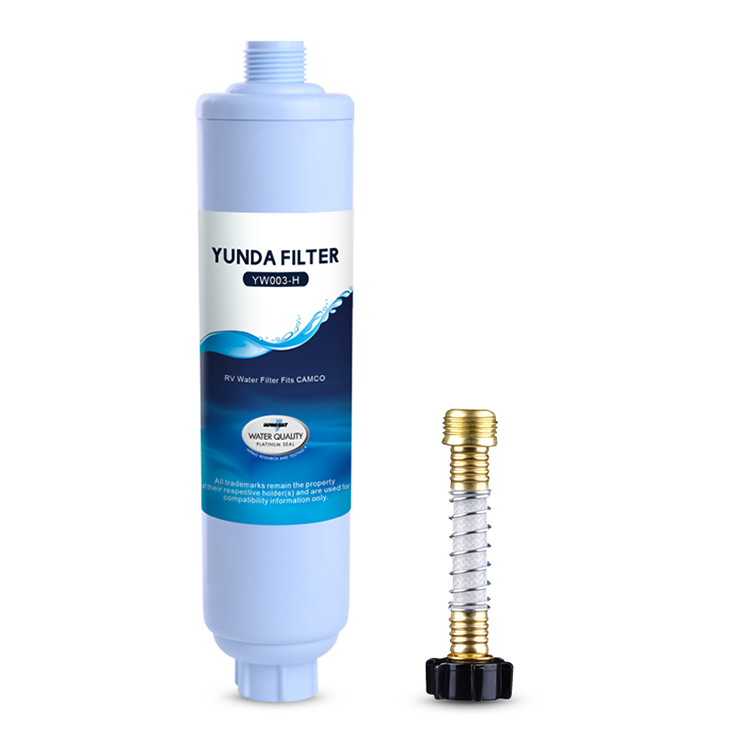
The most basic type of filter for RVs is a simple hose filter. You just connect this filter to a hose line running to your RV and it will begin cleaning the water, at least to a degree. Most sediment can remain with a hose filter, which is something to be wary of. Otherwise, your water should taste and smell clean.

Inline RV Filter

In the same vein as a hose filter is an inline RV water filter. This has sediment removal and carbon filtration capabilities for even better water purification than what you get with a hose filter. That said, the lack of water flow combined with the short-term use you’ll get out of an inline filter means it’s not for everyone.

Reverse Osmosis RV Filter

A reverse osmosis water filter uses a specialized membrane. This membrane is permeable to a point. Pressure sends the flow of water towards the membrane. As the water flows through the semi-permeable membrane, the contaminants get stuck within the membrane, leaving only clean, healthy water to pass through to the other side. This is the water you drink.

How Often Should You Replace Your RV Water Filter?

Some water filters can last as long as six months, such as an inline filter or a ceramic filter that attaches to the sink in your RV. The reason for the extended lifespan though is because this filter won’t purify as many contaminants as other water filter types. So while you can go longer between replacements, you’re not necessarily drinking and using the cleanest water.

Do You Know What is Included in Whole House Water Purification?

Whole house water purification is a systematic water purification solution to meet the family’s “drinking, eating, washing and bathing” all aspects of water demand, and to protect and extend the life of wading appliances in the whole house.

From the functional point of view, whole house water purification includes water purification and water softening. The purpose of water purification is to achieve the filtration and purification of whole house domestic water and terminal drinking water to protect family drinking water health. Water softening mainly improves the quality of life.

In terms of water purification equipment, a complete whole-house water purification system includes a pre-filter, a central water purifier, a water softener, and a direct drinking water purifier at the end.

Front whole house water filter

Most of our domestic water comes from municipal water supply. In the process of flowing through, due to the aging of pipelines, it will be accompanied by secondary pollution such as sand, rust, and algae, which will make the tap water turbid and shorten the service life of wading appliances.

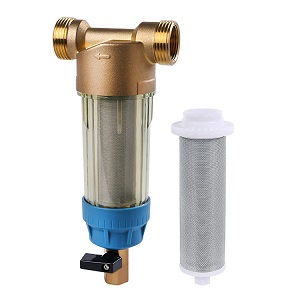
The pre-filter can effectively intercept large particles such as sand, rust, and algae in the water, protect the service life of pipelines and other wading appliances, and solve the pollution caused by various suspended solids, sediment and other large particles from the source, and There is no need to replace the filter element, just regular cleaning.

Water Softener

If the domestic water quality is too hard, it will cause the boiling water to have white scale, the skin pores will become larger, and it will take time and detergent to wash the clothes…

The water softener can effectively remove the hardness ions in the water, prevent pipeline blockage and equipment damage caused by scaling, achieve the purpose of removing scale and softening water quality, making hair soft and fluffy, clothes soft and colored, and bathing and skin care cleaning is more thorough.

Direct Drinking Water Purifier

Viruses, hormones, pesticides, heavy metal residues and other harmful substances in tap water cannot be drunk directly, which poses a threat to human health.

The terminal direct drinking water purifier has multi-stage filtration and purification layer by layer to separate harmful substances in the water, and has the effect of direct drinking without waiting.

The terminal direct drinking machine is generally divided into RO reverse osmosis machine and ultrafiltration machine. The RO reverse osmosis machine can effectively filter heavy metals and bacteria. The ultrafiltration machine can protect the health of family drinking water while retaining the minerals in the water to enhance the taste.

How to Care for Your Water Filter

The very design of the water filter means that it will eventually clog. Remember, it’s not killing those creepy crawlies in the water; it’s trapping them in the filter, where they remain. The first sign that your filter may need some maintenance is that it becomes difficult to pump. Don’t force the issue. If you try to force the water through the pump, you may wind up with microscopic bugs in your water supply.

To get the longest life out of your water filter, it’s important to follow the manufacturer’s instructions on care and maintenance. But there are some general tips to keep in mind. You can count on filtering about 100 gallons of water before your water filter needs to be changed. Proper care and a little preventative maintenance will go a long way in reaching this goal.

You can scrub some water filters to clean them. If your filter is one of these, scrub it gently with a toothbrush when it becomes difficult to pump. If your water filter cannot be scrubbed, it may still be possible to clean it. Some water filters can be immersed in clean water and rinsed gently. Of course, this is something that must be done at home with clean tap water.

If your water filter comes with a pre-filter, be sure to use it. A pre-filter captures some of the larger debris before it enters the main filter. If your water filter doesn’t have a pre-filter, and the water around you has a lot of sediment, make your own, using a coffee filter or clean shirt.

Some filters can be backwashed. To backwash your filter, remove the intake hose and reattach it to the filter outlet. When you pump water with the hose attached this way, it will send clean water through the filter, loosening debris that may be clogging it up. It’s important to sanitize the filter with a solution of one capful of bleach to one quart of water before using it again. Pump the solution through the filter and let it dry thoroughly before storing it away or using it.

How to Choose an Eco-Friendly Water Filter for Your Home

If you decide to invest in a water filter to commence or continue your planet-saving efforts, you’ll need to ensure you have the correct type of filter system for the job. Now, not all water filters are created equal. So, which filter system should you choose? Let’s break down the different water filtration systems to help you decide which is best for you.

Whole-House Water Filters
Whole-house water filters  remove harmful contaminants and impurities in the water from every faucet in your home for cleaner water for drinking, cooking, doing the dishes and laundry, showering, and more. Since Whole-house filters filters reduce up to 99.9 percent of chlorine, lead, pesticides, and other contaminants, your water will taste and smell better. You can also take your whole-house system one step further by adding a sediment filter to remove large particles and particulate matter, a UV filter to eliminate up to 99.9 percent of bacteria and viruses, and a water softener to combat hard water. Perhaps the biggest downside to this type of filter is its upfront cost (although you’ll end up spending less over time as opposed to buying bottled water), and you cannot bring it around with you (quick fix: you can still fill up a reusable water bottle for when you’re away from home).

Under-Sink Water Filters
Another fantastic option for getting clean drinking water in your home is with an under-sink water filter. If you only want to filter the water at a single faucet, say, your kitchen faucet, an under-sink water filter is an excellent fit. Under-sink filters are a great alternative to whole-house filters because they are easier to install, portable, and usually less expensive. They are also perfect for filtering heavy metals, such as lead, fluoride, arsenic, chlorine, chloramines, and other unwanted toxic contaminants in water. 

Countertop Water Filters
Countertop water filters provide an easy way to get great-tasting, healthy water with minimal or no installation. While they don’t provide water for the entire home, like a whole house filter, they offer the same clean, fresh water to a single faucet – without requiring a permanent fixture. That means quicker and easier installation. Water pitchers are a popular type of countertop filter. These devices use gravity to trickle water through filters, while other countertop filters use electricity to provide clean water instantly.

The Best Water Filter for Your Home
Choosing the best type and model water filter for your home will depend on a few factors, such as your water source, filtration requirement, the specific contaminants plaguing your water supply, if any, your budget, etc.

Why do You Need a Well Water Filter System in the First Place?

Drinking water can expose people to a host of toxic pollutants and pathogens. Because of this, public water systems employ various water treatment methods and monitoring tactics to protect consumers from such contaminants. Private wells, on the other hand, generally do not receive the same treatment and services that public wells do. Therefore, private well owners are responsible for protecting their water from potential contaminants like:
microorganisms (like bacteria, viruses, parasites, etc.);
nitrate and nitrite;
heavy metals (such as lead, copper, arsenic, etc.);
radionuclides (uranium and radium);
organic chemicals (found in inks, paints, solvents, disinfectant, pharmaceuticals, etc.);
fluoride;
and others.
Without a premium whole house well water filtration system, these contaminants can easily make their way into your household and wreak havoc on you and your family’s health and personal grooming, your water-using appliances, water heaters, and so forth.
Thankfully, the best whole house well water filters can remove almost every contaminant that is present in groundwater, keeping it pure and safe to drink. These systems also improve the taste and smell of your drinking water by removing minerals like sulfur that can make your water smell like rotten eggs. Furthermore, some whole house well water filtration systems can prevent buildup and corrosion in pipes and appliances, helping both last longer, and saving you from potentially costly repairs. They can also improve water quality and discoloration, and most importantly, give you peace of mind.

What is the Function of the Faucet Filter?

Installing a faucet filter can make our water cleaner and safer. Many people choose faucet filters at home, this is also to improve their quality of life.

Balance acid-base

The water quality itself has hardness, acidity and alkalinity. Partial acidity or partial alkalinity are harmful to human health. After using the faucet filter, the acidity and alkalinity of the water quality can be adjusted.

Remove impurities

Most of the water used in cities comes from water purification plants. However, chemical substances such as bleach and disinfectant are used in the process of water purification, and a certain amount of chlorine or ammonia will remain after use. In the process of transporting tap water, it will enter our kitchen and enter our lives through a series of water pipes. Iron water pipes will inevitably produce some rust after long-term use. For these substances, the faucet filter can be a good solution.

Avoid secondary pollution

Many families now use drinking fountains with filtering function or bottled mineral water. However, in addition to these direct drinking water, do you use tap water when you cook, brush your teeth, wash vegetables, and wash dishes? To ensure drinking water safety, the problem of indirect drinking water at home should also be paid attention to. Although the tap water flowing out of the faucet is guaranteed by the disinfection treatment of the water plant, it is often prone to secondary pollution during the transmission process. The installation of faucet filters can avoid secondary pollution of water.

Frequency of replacement

The faucet filter has a limited adsorption capacity. After a period of use, the adsorbent will become saturated. Not only can it not remove impurities, but it will release new pollutants. Therefore, experts remind: When using the faucet filter, try to replace it once a month.

The Principle of Reverse Osmosis System System Filter

The principle of the reverse osmosis system is very simple. It is to filter out impurities in the water through multiple filter materials to ensure the purity of the water entering the home. The current mainstream filter materials are as follows:

Polypropylene Sediment Filter

PP cotton is the pre filter of reverse osmosis system

This can be said to be the basic type of filter media, similar to the primary filter in an air purifier, which absorbs large particles through internal capillary fibers, which can effectively remove impurities with a particle size greater than 5 microns, such as sand, rust, and suspended matter. Its purification accuracy is not high, and its main function is to ensure the normal operation of the internal precision components. Generally speaking, the replacement of the pre filter of reverse osmosis system mainly depends on the color. If the filter material changes color, it means that the interior is saturated and needs to be replaced in time.

Activated carbon filter is mainly used to adsorb peculiar smell and pigment

Activated carbon filter of reverse osmosis system is mainly used to adsorb organic matter, odor and pigment, and its adsorption effect depends on the pore size of activated carbon. Most of the reverse osmosis system uses activated carbon particles in the second layer, also in order to ensure the normal filtering effect of the internal precision diaphragm. In addition, some water purifiers also use activated carbon in the innermost layer to further absorb the remaining odors in the purified water.

What is RO membrane?

The full name of RO membrane is reverse osmosis membrane. You may not believe it. It is a product of bionics, which is made by scientists imitating the membrane in seagulls. The pore size of the RO membrane is only 0.1 nanometers. Theoretically, 0.5 nanometers of water molecules cannot pass through, but under a certain pressure, water molecules can still “squeeze through”. What the RO water purifier needs to do is to control this pressure. So that the water molecules can just pass but other ions can’t pass, the pure water purification is realized.

Shower Head Filter Protects Your Skin and Hair

Install a shower head filter, it can protect your skin to enhance the moisturization of the epidermis, reduce the rate of epidermal moisture loss, and then reduce the amount of hair loss.

In life, the skin is exposed to hard water for a long time, especially when taking a bath, the hardness ions will combine with cleansing products to produce residues, destroy the scalp barrier, and cause the skin to dry and sensitive and then naturally fall off.

Therefore, the use of soft water can improve the moisturizing degree of the skin epidermis, reduce the rate of epidermal moisture loss, and then reduce the amount of hair loss! So how can our water become the soft water standard? Just install a shower filter to convert hard water into soft water!

The YUNDA 6-Stage shower head filter can effectively reduce the removal of chlorine, fluorine, heavy metals, sediments, pesticides, bacteria, impurities and odors in the tap water, leaving your hair softer and your skin smoother and softer. Spiral design, just screw on by hand.

The shower head filter can remove unpleasant odors and impurities, quickly relieve fatigue, slow down aging, and make your skin smooth. YUNDA shower head filter water softener can be used as a moisturizer, purifier, soften and provide the best feeling for sensitive skin. The universal shower filter can be installed in any household. Suitable for most shower heads, fixed shower heads and hand showers.