Why not use a ro system? It is the best way for you to drink safe and healthy water. Before installing, you must first understand the principle of the ro system. Osmosis is the passage or diffusion of water or other solvents through a semipermeable membrane that blocks the passage of dissolved solutes
What, you don’t get it? No fear. Most of us don’t, which is why there are countless explanations and analogies to clarify osmosis. We’ll explore a few of those, but first let’s break osmosis down to its parts to get a grasp on it. First, we’ll make our solution. We start with a boring old cup of water. To spice things up, we’ll call water the “solvent” — which is convenient, because that’s what it is. To make our solvent a little tastier, we’ll dissolve in some delicious sugar. The sugar is the solute. Just to keep track, we now have water (solvent) that we’ve dissolved sugar (solute) in, to make sugar water (our solution). Now that we have our solution of sugar water, we’ll grab a U-tube. This is not an internet video of kittens and monkeys hugging; a U-tube is a beaker, shaped in a u-shape. Right in the middle of the tube, imagine a bit of Gore-tex that cuts the U in half. Gore-tex is our “semipermeable membrane.” Gore-tex is a thin plastic, dotted with a billion tiny little holes that allow water vapor to pass through, but liquid to stay out. In one arm of the U-tube, we pour our sugar water mixture. On another we pour our plain old water. That’s when the magic of osmosis begins, if you find the movement of water magical. The level of liquid in the sugar water arm will slowly rise, as the solvent (water) moves through the Gore-tex, to make both sides of the arm more equal in a sugar-to-water ratio. But why does that happen? Simply put, because water wants to find equilibrium. And because the one side of the arm is crowded with sugar, pure water from the other side decides to move on over to make the concentration more equal or until the osmotic pressure (the pressure that happens as the molecules move) is reached. So there you are; osmosis is when a solvent of low concentrated solute solution moves through a membrane to get to the higher concentrated solution, thus weakening it. You did it!
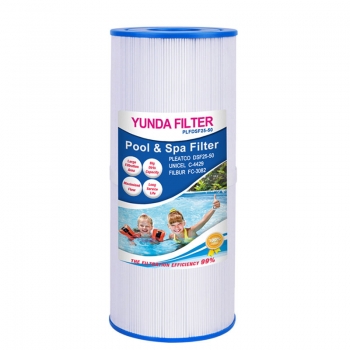
Pool Cartridge filters take advantage of pleated cartridges by maximizing the square footage of the filter. The larger the surface area, the more dirt particles you can filter out. Cartridge filters can capture debris as small as 10-15 microns. In terms of efficiency, cartridge filters fall in the middle. Image result for how a cartridge filter worksHowever, they are the easiest to maintain.
When the pool filter cartridges are dirty or the pressure in your filter rises, it is time to clean them. Depending on the water chemistry, most pool owners clean their cartridges every six months. Cleaning is as easy as using a garden hose to rinse them off. There is no need to backwash a cartridge filter.
Pool filter cartridges work best at slow flow rates. An overly-sized pool pump has the potential to push the water straight through the cartridge filter and bypass the filtering stage altogether. It is important not to oversize your pool pump, especially when using cartridge filters. However, this also makes cartridge filters more efficient. Cartridge filters utilize and waste less water. Unlike sand filters, using a cartridge filter saves you money on chemicals and water.
Pros
Low maintenance Easy to clean and replace filter cartridges The easiest type of filter to install
Cons
Heavy algal build-up can potentially clog the cartridge. You will need to rinse the cartridge more frequently. Depending on the make and model, the price of a replacement cartridge can be high Works best with slow flow rates
If you’re looking for a reliable water treatment system that filters all the water coming through your faucet, then an under-sink water filter may be a good investment. As their name suggests, under-sink water filters (a.k.a., under-counter filters) can fit under your kitchen sink – entirely out of sight. Not only are they unobtrusive, but they are also budget-friendly and efficient. They can even solve the constant refilling issue associated with pitcher filters. Thank goodness!
Further, under-counter water filters require low maintenance. Once installed, you won’t have to change the filters for months. That means you can banish all those pitcher filters from your life forever, and enjoy the healthy perks of crystal-clear, great-tasting filtered water without the frequent refilling problems.
But considering all those excellent benefits, you might start to wonder if under-sink water filters are a good investment compared to some of the other types of water filtering solutions on the market, such as whole-house filtering systems, reverse osmosis water filters, and others.
To satisfy your curiosity, we’ll be discussing the good, the bad, and the ugly about under-counter water filters. Hopefully, you’ll learn everything you need to make an informed buying decision when the time comes. Let’s go!
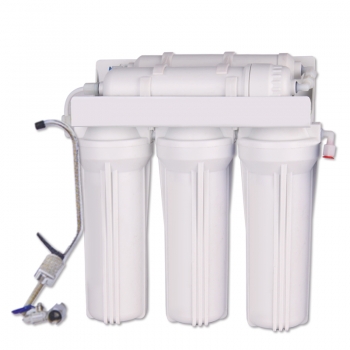
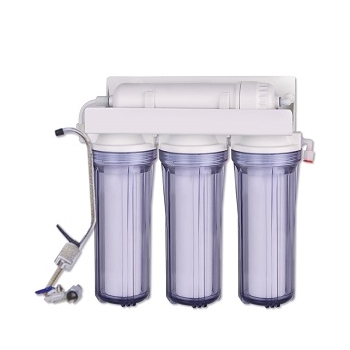
What is an under-sink water filter? An under-sink water filter is a Point-of-Use (POU) device that works to remove many different kinds of contaminants from drinking water. POU means that the system is installed where you need access to clean water, such as at your kitchen or bathroom faucet, or anywhere you have an appliance that requires clean, filtered water. Also, under-sink water filters are in-line filters that connect directly to your waterline. The water passes through the filter before coming through your tap or other outlets. However, some under-sink filters dispense water through their own specially-installed faucet.
How do under-sink water filters work? The water delivery process of a conventional under-sink filter is pretty simple and straightforward. The filter gets its water via a flexible plastic tube that’s connected directly to your cold-water line under the sink. Essentially, the tube diverts some of the water to the filter.
The water then leaves the filter through a separate flexible plastic tube and is delivered to you through the filter’s own dedicated faucet, mounted on top of the sink. That means there’s no mixing with unfiltered water.
Because of the constant pressure on the system, the water flows from the filter and out the tap when you turn on the dedicated faucet. Only drinking water delivered via the special faucet is filtered. The sink’s regular cold and hot water functions remain independent.
In contrast, simple under-sink filters have a slightly different water delivery system. In this arrangement, all of the water is diverted through the filter, and the filtered water is dispensed only through the regular cold-water sink faucet.
The Pros They’re convenient and efficient: Under-sink water filters provide instant, permanent access to filtered water from a single water source. So, you won’t have to purchase a more expensive solution or refill a pitcher anymore. Besides that, under-sink filters are highly recommended these days because they don’t produce any wastewater. They deliver targeted filtration: If you don’t want to waste money filtering water for your bathroom, laundry, and toilet with a whole-house filter, under-sink filters allow you to treat water at specific points in your home. After all, most families are mostly concerned with making sure that their drinking water is safe. They save counter space: If you need the valuable storage space on top of your sink or counter, installing an under-sink filter will be a good choice, especially if you live in a small apartment and need all the countertop space possible. Better capacity and speed: The best under-sink water filters on the market clean around 1,000 gallons of water. This means that some under-sink filters can last for a year before they need to be replaced. Moreover, because under-sink filter use water pressure to force water through the filter, their filters can be denser, so they can remove a broader range of potential contaminants. No need to replace cartridges very often: When it comes to maintenance, under-sink water filters are a step-up from pitcher filters. Under-sink filters offer at least six months of filter-replacement-free operation, while filter replacement is required every two months or so for pitcher filters.
Trying to find the correct replacement cartridge for your swimming pool or spa can be quite confusing. Filter cartridges come in a vast array of sizes, and the tops and bottoms of cartridges come in a variety of configurations. Our goal is to make it as easy as possible for you to determine the right filter cartridge for your particular swimming pool or spa.
Pool Cartridge Filter Pros: Filters contaminants as small as 10 microns No backwashing; less water waste Performs well at low speeds, such as with variable-speed pumps Pool Cartridge Filter Cons: More work than sand filters Lasts only 2 to 3 years Deep cleaning required 1 to 2 times per year
Though they’re typically a bit more expensive than sand filters, cartridge filters are just as easy to maintain, and are more effective as long as you don’t have a huge pool.
Inside a tank slightly smaller than their sand cousins is a plastic cylinder surrounded by pleated polyester filter media and capped on each end. Water flows into the tank and through the pleats. Debris as small as 10 microns is captured in the filter, then clean water heads back to the pool.
Cartridges are energy efficient and inexpensive. As the filter collects contaminants, it’ll need cleaning. Rather than backwashing, you’ll simply remove the cartridge from the tank, and spray it with a hose to remove debris and dirt.
Occasionally, you’ll want to spray it down with filter cleaner, and on a regular basis, soak it in diluted muriatic acid or a chemical filter cleaning solution. While this is a bit more physical work for you than backwashing, it wastes less water.
– Under-sink water filters are installed under your kitchen counter, thus, being out of sight.
– Most countertop water filters are attached to your kitchen tap via a tube, which some people find disturbing. With under-sink water filters, you can keep the clean look of your kitchen counter;
– In reverse osmosis systems, an under-sink RO system will have a better filtered water output, given that counter-top RO systems have a weaker water flow and are unable to produce very large quantities of filtered water;
Cons:
– Under-sink water filters are usually a bit larger than counter-top water filters, so even though they are not placed next to your kitchen sink as most countertop water filters, under-sink water filters still take up more space than counter-top water filters;
– Under-sink water filters are generally more expensive than countertop water filters;
– Under-sink water filters are a bit harder to install and even though you won’t necessarily need to call a plumber, you will still have to put a bit of effort into installing one.
– Countertop water filters are smaller and, depending on the model, can take up less space than an under-sink water filter.
– Countertop water filters are easier to install and easy to move;
– Overall, countertop water filters are cheaper than under-sink water filters;
– Some countertop water filters like gravity water filters don’t have to be attached to a water supply or kitchen tap and don’t require electricity like a pumped RO system or an UV water filter would do;
Cons:
– Performance in terms of speed, water flow and water holding capacity are a problem with countertop water filters;
– Even though countertop water filters are usually smaller, the fact that they are placed next to your kitchen sink and are attached to your kitchen tap is a disadvantage compared to under-sink water filters that stay hidden in the kitchen cupboard.
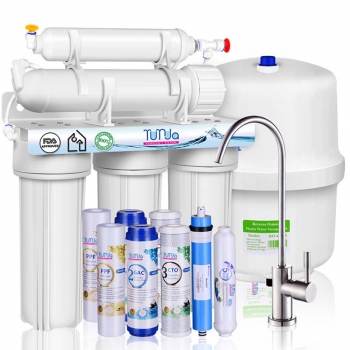
The function of the water filter is to remove floating substances, heavy metals, bacteria, viruses, residual chlorine, sediment, rust, microorganisms, etc. in the water. It has high-precision filtering technology. The household RO System water filter is 5 Stage net Water filter technology or 6 Stage water filter technology.
5 Stage RO System water filter technology
The first stage is the filter cartridge, also known as PP cotton filter cartridge (PPF), the second stage is granular activated carbon (UDF) filter cartridge, the third level is the precision compressed activated carbon (CTO) filter cartridge, and the fourth level is the reverse osmosis membrane or ultrafiltration The filter membrane, the fifth stage is the post activated carbon water filter cartridge.
The six-stage RO System water filter technology finally added a first-level filtration technology as a weakly alkaline energy bar (PPF filter + granular activated carbon + sintered activated carbon + ultrafiltration membrane + rear activated carbon + weakly alkaline energy bar). The water filter is not only suitable for areas with serious tap water pollution, but also can filter residual chlorine in regular tap water, and can improve the taste of water.
Though Pool Cartridge Filters are typically a bit more expensive than sand filters, cartridge filters are just as easy to maintain, and are more effective as long as you don’t have a huge pool.
Inside a tank slightly smaller than their sand cousins is a plastic cylinder surrounded by pleated polyester filter media and capped on each end. Water flows into the tank and through the pleats. Debris as small as 10 microns is captured in the filter, then clean water heads back to the pool.
Pool Filter Cartridges are energy efficient and inexpensive. As the filter collects contaminants, it’ll need cleaning. Rather than backwashing, you’ll simply remove the cartridge from the tank, and spray it with a hose to remove debris and dirt.
Occasionally, you’ll want to spray it down with filter cleaner, and on a regular basis, soak it in diluted muriatic acid or a chemical filter cleaning solution. While this is a bit more physical work for you than backwashing, it wastes less water.
Pool Cartridge Filter Pros: Filters contaminants as small as 10 microns No backwashing; less water waste Performs well at low speeds, such as with variable-speed pumps Cartridge Filter Cons: More work than sand filters Lasts only 2 to 3 years Deep cleaning required 1 to 2 times per year
Advantages: Purified water quality, good taste, no secondary pollution.
Disadvantages: resources are wasted.
Ultrafiltration Membrane Water Filter
This water purifier uses a filter element structure, which is divided into various types according to different needs. It is the mainstream model in the current and future markets.
Generally, there are coarse filtered water filters and direct drinking series water filters; coarse filter water purifiers generally use PP cotton water filter cartridges and activated carbon water filter cartridges, which can remove various impurities, rust, and sand seen by the naked eye in the water. And other harmful substances, but not suitable for direct drinking. Direct drinking water filters generally use ultrafiltration membrane water filter cartridges or nanofiltration membrane water filter cartridges. They have large water output and high filtration accuracy, which can effectively remove various types of bacteria, viruses, E. coli and other human bodies in the water. Harmful macromolecules. The filtered water can be directly consumed. It retains minerals that are beneficial to the human body. It is equivalent to the quality of mineral water. It is suitable for the entire family or kitchen, or it can be used only for drinking water. It has low cost. The advantages of easy installation and long service life.
The only drawback is that it cannot remove calcium and magnesium ions (water alkali) in the water. If it is used with a water softener, the effect is perfect.
RO Water Filter System
This water purifier uses RO reverse osmosis technology, which first appeared in the aviation industry and was developed for the purpose of solving drinking water for pilots. It has the advantage of high water output accuracy (except for water molecules, no substance can pass), is pure water.
The disadvantage is that the purified water is too pure and lacks trace elements that are beneficial to the human body. An average cup of pure water produces 3 cups of waste water and must use electricity; and the maintenance cost of the machine itself is relatively high, because there are many pipe fittings. Small problems such as water seepage are prone to occur.
Water Softener
The water softener is based on the principle of ion exchange, that is, Na+ is used to exchange Mg2+Ca2+, so that the hardness of the water is reduced to less than 70 mg/liter to become soft water. Its main function is to remove water, alkali and scale.
Advantages: Removal of scale, water and alkali effect is good, at the same time large flow rate, basically does not reduce water pressure.
The cleaning ability of soft water is particularly strong, the effect of washing, showering, beauty and skin care is strong, and the degree of cleanliness is high. The use of soft water can avoid the scaling of various water heaters` central air conditioning, prevent clogging of showerheads, and extend the service life; it can also reduce energy consumption.
At the same time, it also saves washing supplies and lowers housework intensity. Soft water is most suitable for domestic use.
Disadvantages: Can’t get rid of bacteria, viruses, and organic matter. It is not recommended to drink directly; it needs salt consumption during regeneration; and produces a certain amount of wastewater.
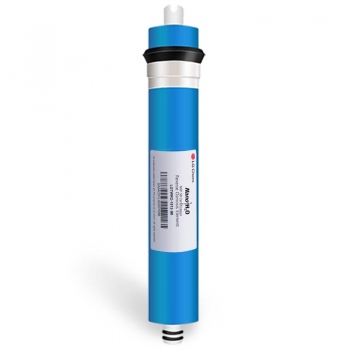
Reverse osmosis membrane is the core element of realizing reverse osmosis water filter, and it is an artificial semi-permeable membrane with certain characteristics made by simulating biological semi-permeable membrane. RO membranes are generally made of polymer materials. Such as cellulose acetate film, aromatic polyhydrazide film, aromatic polyamide film. The diameter of the micropores on the surface of the RO membrane is generally between 0.5 and 10 nm, and the permeability is related to the chemical structure of the membrane itself. Some polymer materials have good salt repellency, but the water penetration rate is not good. Some polymer materials have more hydrophilic groups in their chemical structure, so the water penetration rate is relatively fast. Therefore, a satisfactory reverse osmosis membrane should have an appropriate penetration or desalination rate.
RO membrane should have the following characteristics: 1. It should have a high efficiency of desalination at high flow rates. 2. It has high mechanical strength and service life. 3. Can function under lower operating pressure. 4. Can withstand the influence of chemical or biochemical effects. 5. It is less affected by factors such as pH value and temperature. 6. The raw materials for film making are easy to source, easy to process and low in cost. There are two types of RO membrane structures: asymmetric membrane and homogeneous membrane. The membrane materials currently used in ro machines are mainly cellulose acetate and aromatic polyamides. Its components include hollow fiber, coil, plate and frame and tube. It can be used for separation, concentration, purification and other chemical unit operations, mainly used in pure water preparation and water treatment industries.
RO System not only removes the dust, sediment, and some organic matter and microorganisms in the water, but also removes the calcium and magnesium ions that form scale when boiling water. That is to say, the RO System removes almost all impurities in the water.
Most families drink pure water. As we all know, the most important thing for water filter products is the filter element. The household water purifiers on the market are mainly divided into two types of ultrafiltration systems and reverse osmosis olefins according to the filter element structure.
The pore size of the ultrafiltration membrane is about (0.001-0.1) um, and colloids, rust, suspended matter, sediment, macromolecular organic matter, etc. in the water can be intercepted by the ultrafiltration membrane to complete purification. Ultrafiltration water filters generally do not require a pump and do not require power consumption, avoiding electrical safety issues. And it has large water output, no waste water, environmental protection and energy saving. In addition, due to fewer joints and low water pressure, the normal water pressure of municipal water is generally sufficient, so the failure rate and the probability of water leakage are relatively low.
The shortcomings of ultrafiltration membranes are also obvious. After prolonged use of ultrafiltration water filters, the residue on the surface of the membrane will affect the water output and need to be cleaned in time; the removal effect of chemical contaminants in water is poor, and the taste of water outlet is general , Can not reduce the hardness of the water, the boiling water container still has the possibility of scaling.
Compared with the ultrafiltration water purifier, the output water quality of the reverse osmosis system is cleaner and safer. It can remove various harmful impurities and metal ions in the water. The water outlet has a good mouthfeel, which can reduce the hardness of the water.
The disadvantage of the reverse osmosis water purifier is that the water pump needs to be energized, there are electrical safety problems, there are many joints, high water pressure, failure rate and probability of water leakage are relatively high, and the structure is complicated and the cost is high. Moreover, its water output is difficult to reach the output of the ultrafiltration water purifier, which will generate more wastewater. In terms of environmental protection and energy saving, the reverse osmosis water purifier is far inferior to the ultrafiltration water purifier.
Generally speaking, if the quality of city tap water is good and there is no large industrial sewage output around, ultrafiltration can meet the needs of life. On the contrary, in rural areas or where chemical pollution is more serious, RO systems come in handy.



 sun yunda