Are Chloramines Safe to Drink?

According to the EPA’s water quality regulations, it is safe to drink water with up to 4mg/L of chloramines. In general, chloramines are not believed to be a health hazard. Studies have demonstrated that drinking water with 4 mg/L (or 4ppm) of chloramines is not linked to any illness or longterm health effects. Since municipal water suppliers are held to strict guidelines when it comes to the water they distribute, it is very unlikely that you would be exposed to water with greater than 4 mg/L of chloramine. 

The sole exception to this is hemodialysis patients. Chloramines are able to enter the bloodstream of hemodialysis patients through the dialysis membrane. Once in the bloodstream, chloramines alter hemoglobin, resulting in a potentially life-threatening condition called hemolytic anemia. If you are on dialysis, you should seek to avoid the use of water with chloramines. 

Pool Filters for Your Pool

Pool Cartridge filters take advantage of pleated cartridges by maximizing the square footage of the filter. The larger the surface area, the more dirt particles you can filter out. Cartridge filters can capture debris as small as 10-15 microns. In terms of efficiency, cartridge filters fall in the middle. Image result for how a cartridge filter worksHowever, they are the easiest to maintain.

When the pool filter cartridges are dirty or the pressure in your filter rises, it is time to clean them. Depending on the water chemistry, most pool owners clean their cartridges every six months. Cleaning is as easy as using a garden hose to rinse them off. There is no need to backwash a cartridge filter.

Pool filter cartridges work best at slow flow rates. An overly-sized pool pump has the potential to push the water straight through the cartridge filter and bypass the filtering stage altogether. It is important not to oversize your pool pump, especially when using cartridge filters. However, this also makes cartridge filters more efficient. Cartridge filters utilize and waste less water. Unlike sand filters, using a cartridge filter saves you money on chemicals and water.

Pros

Low maintenance
Easy to clean and replace filter cartridges
The easiest type of filter to install

Cons

Heavy algal build-up can potentially clog the cartridge. You will need to rinse the cartridge more frequently.
Depending on the make and model, the price of a replacement cartridge can be high
Works best with slow flow rates

What is TDS?

TDS is an aggregate measurement of all the organic and inorganic material present in a sample of water. This includes dissolved organic compounds, inorganic compounds, salts, minerals, and ions. TDS meters measure the conductivity of the water in parts-per-million (abbreviated as ppm), which is equivalent to measuring the mass of contaminants present per liter of water (abbreviated as mg/L). TDS is a nonselective measurement. It does not differentiate between the road salts dissolved in your well water and the naturally occurring mineral content, like magnesium and sodium. If your TDS levels are above 600, or even in the 1,000s, it is a huge indicator that there is a wildly problematic level of dissolved material present in your water. But if your water’s TDS measures between 300-500, it is considered acceptable and it’s difficult to isolate if any of those dissolved materials are potentially harmful or damaging from a TDS reading alone. 

The EPA considers TDS to be a secondary drinking water contaminant. Secondary drinking water contaminants pose no health risks and are though there are suggested optimal levels of these contaminants, the EPA does not enforce these standards. These instead considered to be primarily cosmetic, aesthetic, and technical inconveniences. For example, acidic water is not dangerous to consume but is extremely corrosive and destroys household plumbing. Hard water similarly does not run the risk of making your and your family sick, but it will wreak havoc on your water heaters and household appliances. High levels of iron can turn your water a bright, unattractive orange color, but this doesn’t mean that drinking this water will cause illness. 

Wholesale Water Filter

Are Chloramines Safe to Drink?

According to the EPA’s water quality regulations, it is safe to drink water with up to 4mg/L of chloramines. In general, chloramines are not believed to be a health hazard. Studies have demonstrated that drinking water with 4 mg/L (or 4ppm) of chloramines is not linked to any illness or longterm health effects. Since municipal water suppliers are held to strict guidelines when it comes to the water they distribute, it is very unlikely that you would be exposed to water with greater than 4 mg/L of chloramine. 

The sole exception to this is hemodialysis patients. Chloramines are able to enter the bloodstream of hemodialysis patients through the dialysis membrane. Once in the bloodstream, chloramines alter hemoglobin, resulting in a potentially life-threatening condition called hemolytic anemia. If you are on dialysis, you should seek to avoid the use of water with chloramines.  

Water Filter Supplier

How do Shower Water Filters Work?

Shower filters reduce skin irritants like chlorine and chloramines from your shower water by passing them through filtration media like KDF. When chlorine content is eliminated, the water is much gentler on your hair and skin and does no longer bears a harsh chemical smell. KDF is a granular zinc alloy that exchanges electrons with waterborne contaminants, chemically converting chlorine and heavy metals into benign materials that will not aggravate your skin. KDF (an acronym for “kinetic degradation fluxion”) is also popularly used to improve the taste of water as well. Everpure, a brand renowned for its restaurant-quality water filtration products, uses KDF media extensively in their filter cartridges. 
KDF eliminates the dissolved chlorine from water by converting the chlorine disinfectants into a water-soluble, environmentally-safe chloride ion. As the chlorinated water passes through the KDF filament, the two dissimilar metals in KDF (copper and zinc) create a galvanic or electrolytic reaction that turns chlorine into chloride. Chloride will not antagonize any skin conditions, negatively affect your hair, and doesn’t bear any undesirable taste. KDF is also adept at eliminating heavy metals like iron, lead, and copper from water supplies. Furthermore, KDF media is bacteriostatic and inhibits internal bacterial growth. The media prevents any algae build-up within the shower filter and is increasingly used as a replacement for bacteriostatic silver within carbon filters. 
Carbon filters are heralded for their ability to remove chlorine from water. However, the efficacy of carbon’s chlorine reduction decreases as the temperature of the water increases. This makes them ideal for drinking water applications, as most people are filling their glasses with cold water. But, since most people are taking hot showers, activated carbon media is a poor choice for a shower filter. Running hot water through activated carbon blocks will actually release contaminants trapped within the carbon media back into the water. Unlike most filter media, KDF’s performance is unaffected by the temperature of the water. 

Why are Chlorine Used in Water?

Chloramines are used to disinfect tap water because of their remarkably long-lasting disinfection properties. Celebrated for their strength as a “secondary disinfectant”, chloramines remain in the water much longer than chlorine. Chloramines are a very stable compound, and won’t readily dissipate or lose potency. Though a weaker disinfectant than chlorine, they retain their disinfection characteristics much longer than chlorine. This means even if you are the home all the way at the outskirts of the city and at the end of the water main, your water will still come out of your tap disinfected and full of chloramine.
Chlorine does have several downsides. Chlorine is a very volatile compound and is eager to dissipate from the water supply. EPA standards require that there is a residual 0.5ppm of the disinfection agent in the water. Since chloramines are so stable, this is easily achieved. Chlorine, however, is far more likely to gas off and leave the water before that house at the end of the municipal supplier. Additionally, when chlorine is added to a water source with organic matter (like a lake or river) it creates “disinfection byproducts” (or “DBPs”.) One of these, trihalomethane (or THM) is a volatile organic compound with several significant health implications. Prolonged consumption of THMs is linked to reproductive complications and cancer. While municipal treatment plants work diligently to ensure that the DBP levels remain low in their water, chloramines offer a safer alternative in this regard. They do not create any byproducts when combined with organic matter. 

Do you Know What a Refrigerator Water Filter Removes?

Water travels through miles of underground pipes before ever reaching your home or business. Along the way, it may collect lead from old pipes, agricultural runoff, and other harmful compounds. 
Most fridge water filters are designed to remove three major contaminants: lead, chlorine, and volatile organic compounds (VOCs). Some are rated to remove cysts and chloramine as well.
Lead
Until the twentieth century, lead was considered harmless and useful in the production of paint, pottery, and plumbing pipes. 50% of solder used for plumbing prior to 1986 contained lead. Because water is a great solvent, it collects lead from old pipes and carries them to your faucet. A building constructed before The Safe Water Drinking Act probably has lead pipes and lead soldered copper and fixtures that could leach into your water.
Because lead is toxic, the EPA sets the maximum contaminant level for lead in drinking water at zero. Ingesting lead leads to reproductive problems, premature birth, and brain, hearing, heart, and kidney damage. See a full list of the health effects of lead from the EPA.
Chlorine
Chlorine disinfects drinking water and has virtually eliminated waterborne diseases like typhoid and dysentery. But it also ruins the flavor of your water. Carbon fridge filters are great giving chlorine-treated drinking water a fresh taste. 
Chloramines are a combination of chlorine and ammonia that municipalities use to reduce the formation of harmful disinfection by products such as trihalomethane. Few studies on the health effects of chloramines have been conducted, and the results of ones that have are unclear. Fridge filters with catalytic carbon remove chlorine and chloramines by separating the chlorine from the ammonia and converting the chlorine into chloride. 
VOCs
Volatile organic compounds (VOCs) are harmful chemicals like herbicides, pesticides, or insecticides. Exposure to VOCs comes primarily from air pollution, paints, preservatives, but they can enter drinking water through agricultural runoff or industrial waste. Many VOCs are carcinogenic or cause liver, kidney, and reproductive problems. 

How do You Remove Chloramines from Water?

Chloramines are best removed from water by catalytic carbon filtration. Catalytic carbon, activated carbon with an enhanced capacity for contaminant removal, is one of the few filtration media that can successfully reduce chloramines from drinking water. Carbon filters, the industry standard for chlorine removal, is an ineffective chloramine filter. The stability of chloramines, the quality which makes them such a powerful disinfectant, also makes them so difficult to remove. The amount of contact time required for activated carbon to cause any significant reduction in chloramines is so long it makes it entirely impractical. It would reduce flow rates drastically and no house could feasibly use a carbon filter to remove chloramines and maintain usable water pressure and flow. 
There are also under-sink options available that can reduce chloramines from your water supply, like reverse osmosis and ultrafiltration. However, these are less commonly employed. Chloramines are best removed by whole house water filters. Since one of their biggest offenses is their aggravation of skin conditions and irritation of the eyes and sinuses, most people seeking to eliminate chloramines will opt to remove it from every fixture in their house, not just from their drinking water. 
Why doesn’t activated carbon remove chloramines? 
Chlorine, on contact with the carbon, chemically alters into the harmless compound called chloride. Carbon filters have expansive surface areas with these exchange sites and are remarkable at removing standard chlorine from water supplies. Chloramines, however, have unique stability as a compound. Upon contact with activated carbon, they are not catalyzed with the same efficiency and speed. In order for activated carbon to remove chloramines, very extensive contact time is required to successfully break the ammonia and chlorine apart. This makes them a poor choice for chloramine reduction, as you could not run a shower or fill a bath with such reduced flow rates. Since skin sensitivity is one of the primary reasons people eliminate chloramines, a filtration system capable of sustaining at least a moderate flow rate is crucial for success.

Where to Use a Reverse Osmosis System for Your Family?

Under the sink? Yes.
Reverse Osmosis Sytem is most commonly installed at the point of use (POU), like under a kitchen or bathroom sink. A point-of-use RO system could also be mounted in a cabinet or remotely in the garage or basement. 
For a refrigerator? Yes.
Connecting an under-sink reverse osmosis system to your refrigerator is simple and worthwhile. Reverse osmosis removes minerals from water, making your ice clear and beverages more refreshing. 
For the whole house? Rarely.
Reverse osmosis can be used to treat water for the whole house. However, unless your water has a specific contaminant that requires reverse osmosis, using an RO system may be over-kill. An RO system solves specific problems like saltwater intrusion in a well or high levels of silica in the water.
An RO system will not provide the flow rate needed to pressurize an entire house. In the rare case where a whole house requires RO water, a large booster pump, like a Grundfos or Davey, provides adequate water pressure. In addition to a large water pump and storage tank, a UV system is needed to disinfect the water once it leaves the tank.
Homeowners have a lot to consider when purchasing an RO system for the whole house. If your water quality is dire enough to warrant whole house reverse osmosis, you likely have other water quality issues that will need to be addressed prior to the water reaching the RO membrane. High levels of water hardness will cause scale build-up on the membrane, reducing its performance and causing it to fail prematurely. Contaminants like iron can also foul the membrane and will need to be eliminated from the water before being treated by the reverse osmosis system.
If you believe your water quality may require whole house reverse osmosis to treat, check out our in-depth guide on whole-house reverse osmosis systems. | Explore how water booster pumps work. 
For showers? No.
If you don’t want to purchase a storage tank larger than your basement, reverse osmosis is not the best option for your shower. The solution is usually much simpler and more focused than reverse osmosis. Shower water with high levels of chloramines can cause nose and eye irritation and aggravate skin conditions. Chloramines are best removed by a whole house catalytic carbon filter. 
Hard water can also lead to unsatisfying showers. Soap does not lather well in water with elevated mineral content, and hard water can leave hair feeling lifeless and dull. An ion exchange water softener will eliminate these contaminants. 
For pools? No. 
The only time you may need an RO system for a pool is if the water contains some contaminant that no other filtration system can remove. If you try to fill a 20,000-gallon pool with RO water, even with the most efficient system, you will send 10,000 gallons down the drain. Good news: the amount of dissolved solids in a pool doesn’t really matter, so other systems do a better job providing clean pool water.
For agriculture? Sometimes.
Reverse osmosis works well for hydroponic farming, but not all plants survive or thrive with RO water. RO is best suited for greenhouses where plants are misted or in small gardens, depending on the types of plants. Since hydroponic farming eliminates soil, and instead nurtures fruits and flowers with only nutrient-rich water, high-quality water is paramount to hydroponic success. Even small amounts of sediments, salts, and dissolved organics can upset the delicate balance of the plant life. RO water allows for total control over your plants nutrient intake.
Explore how to use reverse osmosis water for hydroponics. | Learn more about how hydroponic systems work.
For wells? Yes.
If you get your drinking water from a private well, then an RO system is an excellent way to ensure that the water flowing to your tap is safe. A reverse osmosis system is a perfect way to remove difficult contaminants often found in well water, like nitrates.
In apartments? No.
One point-of-entry unit usually supplies water to an apartment building or condominium, and installing an under-sink system is often not allowed. A countertop filter system is the best option in an apartment. 
At businesses? Yes.
Commercial or industrial reverse osmosis systems are common because commercial units allow drain water to be sent back into the feed supply. Reverse osmosis removes paints, dyes, and other industrial contaminants well. 
For an aquarium? Yes.
If you’re a saltwater fish enthusiast, then an RO system is perfect for you. Reverse osmosis allows you to strip all minerals from the water and add exactly the amount of salt you need back in with a remineralizing filter. Most aquarists rely on a combination of reverse osmosis and deionization (known as RO/DI water) to ensure their fish are immersed in highly pure water, modified to match the fish’s natural environment.

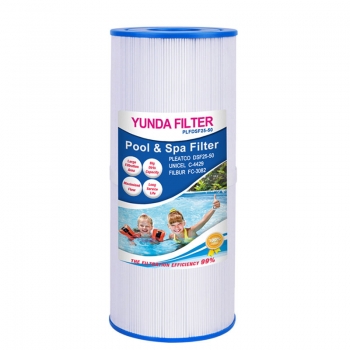
How to Maintain Your Pool Filter Cartridge

How long do pool filter cartridges last?
The lifespan of your pool filter cartridge is going to depend upon how much water goes through the filter, how much care you put into your pool’s maintenance, and how much dirt gets into your pool. For example, always rinse your feet off before you jump in. A lot of those kinds of practices can drag dirt and debris into the pool. This will end up on the cartridge filter.
To maintain a pool filter cartridge, you will periodically have to take it out and clean it. The more you invest in maintaining a clean pool, the less often you will have to clean the cartridges.
Does sunscreen affect the pool filter?
Another thing to consider about filter life is the use of oils. Suntan lotions and tanning oils are going to manifest on your filters as a film. It will build up quickly if you don’t keep it in check. If you are lathering up your kids with lots of sunscreen, the filters are going to have a little shorter life.
When do I clean my pool filter cartridge? 
One indicator you can always look to is the pressure gauge on your filter system. The higher the pressure, the more resistance the pump is having pushing water through the the filter cartridge. When the pressure gets high, it’s time to take it out and clean it.
How do I clean my pool filter cartridge?
You can clean it by simply rinsing it off with the garden hose. Sometimes you may need to take a brush to it, but when you put a brush to the filter, you will erode some of that material. Over time, if you brush it off frequently, you will knock holes in the media and destroy the filter. You can only do that a couple of times before you should replace the cartridge.